No.4, Annai Avenue, Vasanth Nagar EXTN,
Srirangam, Trichy, Tamil Nadu ,620006.
CIN: U31100TN2010PTC078389
DUNS Number: 859496557

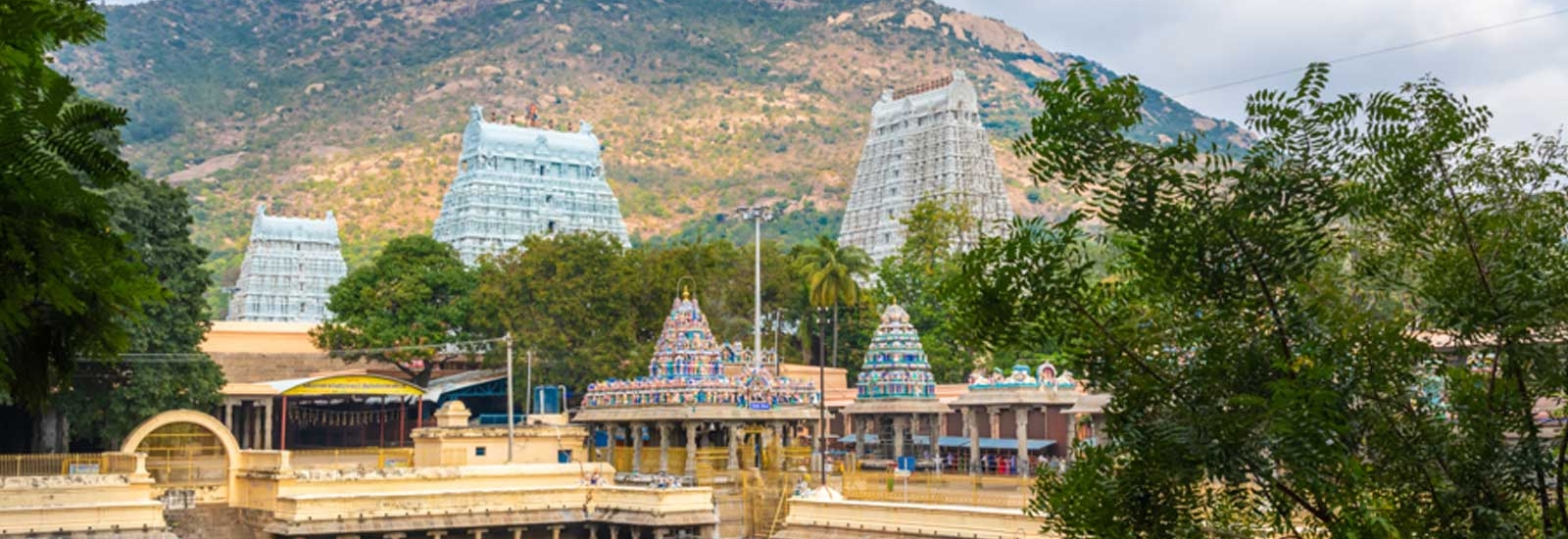
PANCHA BHUTA STHALAM: THE COMPLETE GUIDE TO THE FIVE ELEMENTAL SHIVA TEMPLES OF SOUTH INDIA
Look around you—everything you see, touch, and feel is made of just five fundamental elements. Earth, Water, Fire, Air, and Space (Ether). These aren't just scientific concepts; In South India, they have been worshipped for centuries as living manifestations of Lord Shiva himself.
This is exactly what the Pancha Bhuta Sthalam represents. The term translates simply—Pancha meaning five, Bhuta meaning elements, and Sthalam meaning place. Together, they refer to Pancha Bhoota Sthalam Temples, each dedicated to one element of nature.
Spread across Tamil Nadu, with one in Andhra Pradesh, these temples are among the most revered Shiva Temples in South India. They include Ekambareswarar (Earth) in Kanchipuram, Jambukeswarar (Water) in Thiruvanaikaval, Arunachaleswarar (Fire) in Tiruvannamalai, Srikalahasti (Air) in Andhra Pradesh, and Thillai Nataraja (Space) in Chidambaram.
What makes these Pancha Bhoota Temples truly special? They aren't just places of worship—they are living representations of nature's forces, mentioned in the 7th-century Tevaram hymns and visited by devotees seeking harmony between body, mind, and soul.
In this complete guide, we'll walk you through each temple's fascinating legends, architectural wonders, unique rituals, and everything you need to plan your South India Temple Tour. Let's begin this spiritual journey through the five elements.
Explore 5 Elements of Shiva temple tour package
Pancha Bhoota Sthalam refers to five sacred temples where Lord Shiva is worshipped as the five fundamental forces of nature—Earth, Water, Fire, Air, and Space.
In Hindu philosophy, these elements, known as Pancha Bhutas, are believed to form the building blocks of creation, including the human body. Lord Shiva, revered as Bhootapati or Bhootnath, is worshipped as the divine force that governs and sustains these elements.
What makes this even more fascinating is the Na-Ma-Shi-Va-Ya connection. These five syllables correspond directly to the five elements—a reminder that Shiva isn't just a distant deity but the very essence of nature itself.
The five Pancha Bhoota Temples are spread across South India—four in Tamil Nadu and one in Andhra Pradesh. Interestingly, these ancient shrines lie within a specific latitude and longitude range, almost as if they were strategically placed to represent a complete cosmic circuit. Together, they form a remarkable pilgrimage circuit, inviting devotees to experience Shiva temples in South India not merely as places of worship, but as living expressions of nature, spirituality and ancient wisdom. Visiting all five offers a deeply meaningful South India Pilgrimage Tour, where every temple reveals a different aspect of the divine.
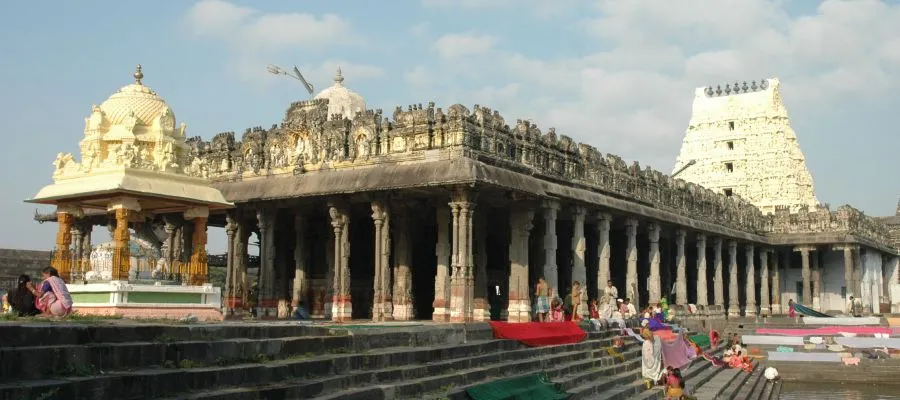
Standing majestically in the temple town of Kanchipuram, Ekambareswarar Temple is one of the most remarkable Pancha Bhuta Sthalam Temples, representing Prithvi (Earth). The presiding deity, Lord Shiva, is worshipped as a Prithvi Lingam, traditionally believed to have been formed from sand by Goddess Parvati during her penance beneath a sacred mango tree.
Here's a beautiful legend that explains its significance. According to temple lore, Goddess Parvati once performed intense penance under an ancient mango tree right here. She sculpted a lingam from the sand of the Vegavathi River and worshipped it with unwavering faith. But the river flooded, threatening to wash away her creation. Desperate to protect it, Parvati embraced the sand lingam. Moved by her devotion, Lord Shiva manifested and united with her. This is why the presiding deity is worshipped as the Prithvi Lingam—a lingam made of sand, representing the Earth element.
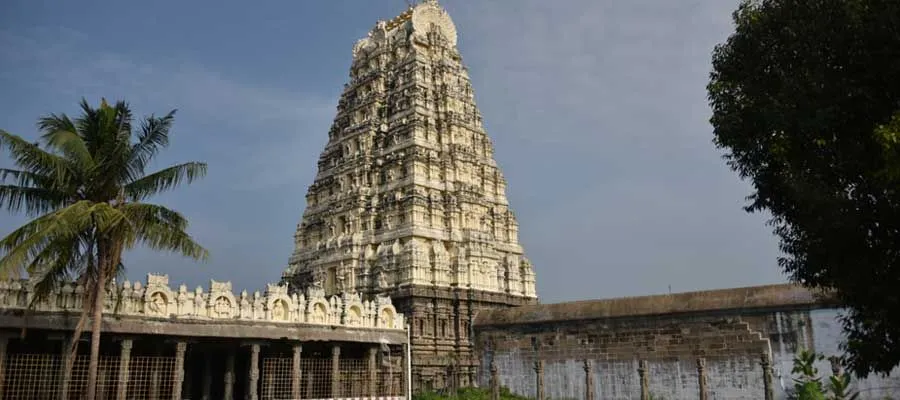
Spread across around 25 acres, this magnificent complex showcases towering gopurams, intricate sculptures, historic inscriptions and a grand thousand-pillared hall. Its striking 11-storey southern tower adds to its architectural grandeur. For pilgrims, history lovers and architecture enthusiasts, this sacred site is an unforgettable stop among the Five Elements of Shiva Temples in South India.
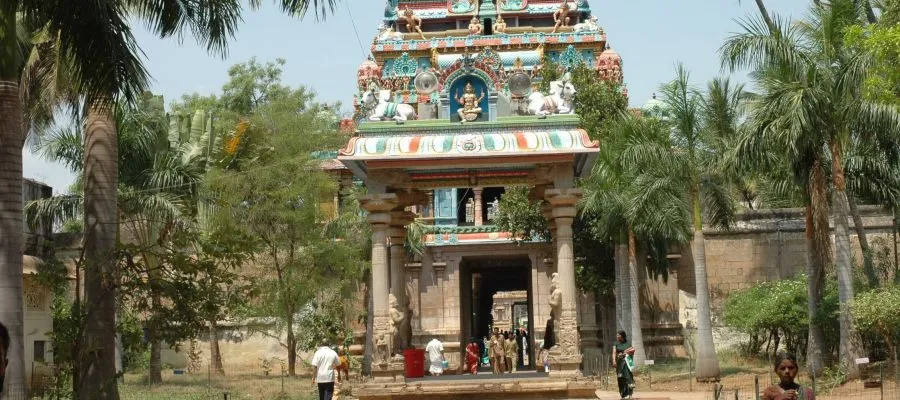
From the solid embrace of Earth, we now flow into the realm of Jala—the Water element. The Jambukeswarar Temple in Thiruvanaikaval, near Tiruchirappalli, is a mesmerising Pancha Bhoota Sthalam dedicated to this life-giving force. Here, Lord Shiva is worshipped as the Appu Lingam, a lingam perpetually surrounded by an underground spring that flows even during the driest seasons.
The legend here is as fascinating as the phenomenon itself. According to temple lore, Goddess Parvati, in her form as Akilandeswari, performed intense penance under a Jambu tree. She fashioned a lingam from the waters of the nearby Cauvery River and worshipped it with unwavering devotion. Lord Shiva appeared before her and imparted the supreme wisdom—Shiva Gnana. Because of this unique Guru-disciple relationship, the deities face opposite directions, and the temple does not conduct the usual marriage ceremony of Shiva and Parvati.
A unique ritual here captures everyone's attention. Every day, male priests dress in traditional women's attire to offer prayers—a symbolic re-enactment of Goddess Akilandeswari's devotion. This daily practice draws pilgrims from far and wide.
Architecturally, the temple is equally stunning. Its 796-pillared hall and massive outer walls are remarkable examples of Dravidian craftsmanship. Another charming legend adds to its mystique—an elephant and a spider once competed in their devotion to Shiva, and both were ultimately granted salvation.
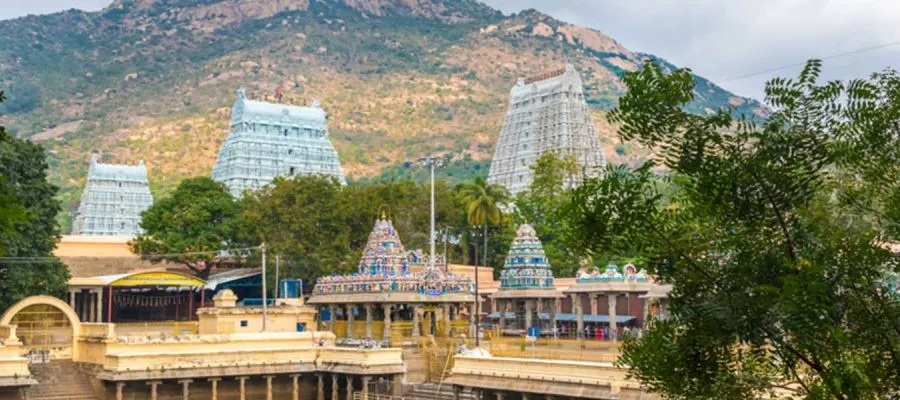
From the flowing waters of Jambukeswarar, we now ascend to the blazing heights of Agni—the Fire element. The Arunachaleswarar Temple in Tiruvannamalai, nestled at the foot of the sacred Arunachala Hill, stands as one of the most powerful Pancha Bhuta Sthalams in South India. Here, Lord Shiva is worshipped as the Agni Lingam, symbolizing the transformative energy of fire.
The legend behind this temple is nothing short of spectacular. According to mythology, Lord Brahma and Lord Vishnu once argued over who was supreme. To settle their dispute, Lord Shiva manifested as an infinite pillar of fire—a Jyoti—and challenged them to find its source. Brahma flew upward, Vishnu dug downward, but neither could reach the end. While Vishnu accepted defeat, Brahma lied about finding the source. As punishment, Shiva decreed that Brahma would have no temples dedicated to him on Earth.
This temple comes alive during the spectacular Karthigai Deepam festival, when a massive lamp is lit atop Arunachala Hill, visible for miles around. Another cherished tradition is Girivalam—a 14-kilometre circumambulation of the hill performed by thousands of devotees during every full moon, believed to wash away sins and grant liberation.
With its powerful mythology, grand architecture and deep spiritual traditions, Arunachaleswarar Temple remains a highlight of any South India pilgrimage tour.
From the purifying flames of Agni, we now drift into the invisible yet ever-present realm of Vayu—the Air element. The Srikalahasti Temple in Andhra Pradesh, nestled on the banks of the Swarnamukhi River, is a revered Pancha Bhuta Sthalam dedicated to this life-sustaining force. Here, Lord Shiva is worshipped as the Vayu Lingam—a white, self-manifested lingam representing the wind.
The temple's name itself tells a beautiful story. It comes from Sri (spider), Kala (snake), and Hasti (elephant)—three devoted creatures who worshipped Lord Shiva with such pure devotion that they attained liberation. This is why the temple is often called the Kailash of the South.
What makes this temple truly fascinating is the phenomenon inside the sanctum. Even when the doors are closed and no windows exist, an oil lamp continues to flicker continuously—a visible reminder of the eternal presence of air. Devotees believe this is Vayu Deva himself offering eternal worship to Lord Shiva.
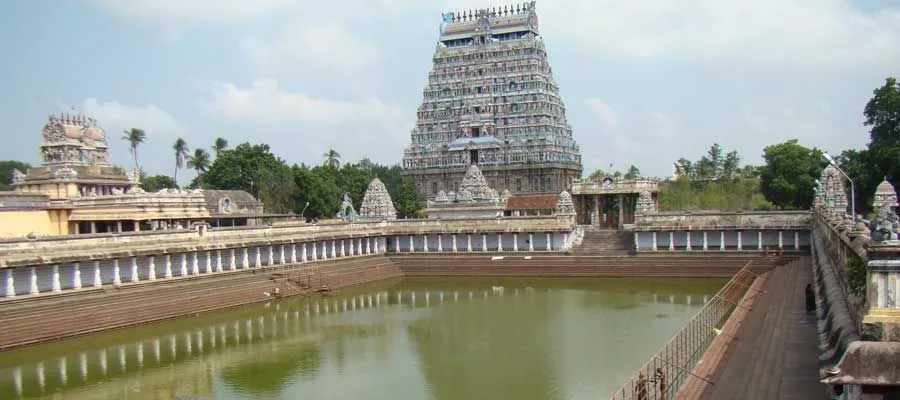
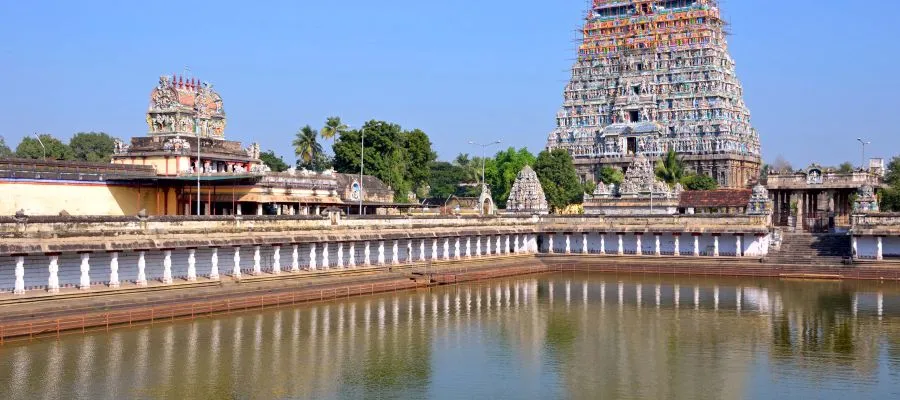
And finally, we arrive at the subtlest of all elements—Akasha, or Space. The Thillai Nataraja Temple in Chidambaram is the crowning jewel of the Pancha Bhuta Sthalams, where Lord Shiva is worshipped not as a lingam, but as Nataraja—the Cosmic Dancer. This is the only temple among the five where Shiva appears in anthropomorphic form, making it a truly unique spiritual destination.
The name Chidambaram beautifully captures its essence. Chit means consciousness, and Ambaram means sky—the space where consciousness resides. This is the ultimate goal of human life.
The legend behind this temple is captivating. Long ago, this was a mangrove forest (Thillai Vanam) inhabited by sages who believed they could control the divine through rituals. To humble them, Lord Shiva appeared as a mendicant. When the sages unleashed serpents, a tiger, and a fierce demon named Muyalakan upon him, Shiva subdued them all. Then, stepping on the demon symbolising ignorance, he performed the Ananda Tandava—the dance of eternal bliss—revealing his cosmic form.
The temple’s spiritual heart is the fascinating Chidambara Rahasyam, where a curtain is drawn aside to reveal an empty space. This simple yet powerful symbolism represents the removal of ignorance and the discovery of the divine within.
For devotees and classical dance enthusiasts alike, this famous Shiva temple in South India offers a profoundly different experience from the other Pancha Bhoota temples.
Conclusion
The Pancha Bhuta Sthalams are more than just ancient temples—they are living reminders that we are woven from the very fabric of nature itself. Earth, Water, Fire, Air, and Space aren't just elements; they are the divine forces that sustain us, and worshipping them is a way of honouring the sacredness of our own existence.
Visiting these Five Elemental Shiva Temples in South India is a journey like no other. Each temple tells a unique story, offers a distinct spiritual experience, and leaves you with a deeper understanding of Lord Shiva's cosmic presence. From the sand lingam in Kanchipuram to the formless space in Chidambaram, every stop on this South India Pilgrimage Tour is a step closer to inner peace.
Whether you are a devoted pilgrim, a lover of history, or simply curious about the spiritual heritage of South India, the Pancha Bhoota Temples promise an unforgettable experience. Plan a thoughtfully curated Pancha Bhoota Temple Tour with Tamilnadu Tourism and discover these sacred shrines at your own pace. Let your journey through the Five Elemental Shiva Temples become a journey within.


Share This News