No.4, Annai Avenue, Vasanth Nagar EXTN,
Srirangam, Trichy, Tamil Nadu ,620006.
CIN: U31100TN2010PTC078389
DUNS Number: 859496557


Ayudha Puja in Tamil Nadu is one of the major festivals in Tamil festival Calendar 2026 linked with Navaratri and takes place on the ninth day of the occasion. It is a special way of showing thanks to the tools, instruments, machinery and other objects which aid people in their work, education, means of livelihood and creative activities. Whether these are agricultural tools and traditional handcraft instruments or modern vehicles, computers and industrial machinery, almost all the items connected with a person's profession can be included in the Ayudha Puja celebration in Tamil Nadu.
The term "Ayudha" generally denotes a weapon, tool, or instrument, and "Puja" means worship. Even though the festival has long been linked with weapons and implements, its significance has changed over the generations. At present, Ayudha Puja is not limited to warriors or traditional craftsmen; people such as farmers, mechanics, factory workers, shopkeepers, drivers, students, teachers, engineers, artists, musicians, office employees and business owners all celebrate the festival in accordance with their own occupations and family customs.
What is so interesting about Ayudha Puja 2026 in Tamil Nadu is the fact that it is linked with Saraswathi Puja, the worship of the Goddess Saraswathi, who is traditionally connected with knowledge, wisdom, education and the arts. Books, musical instruments and educational materials are therefore venerated together with tools and machinery. The festival combines two key concepts: the value of knowledge and the importance of the tools by means of which knowledge and skills are put into practice.
Ayudha Puja is normally carried out on the ninth day of Navaratri, the day known as Navami, and is then followed by Vijayadashami on the tenth day. In Tamil Nadu, the last days of Navaratri are marked by special religious and cultural events in temples, at homes, in schools, offices, factories and commercial establishments. The precise date of the festival should be verified in relation to the Tamil calendar and with the local temple or panchangam since Hindu festival celebrations are based on the corresponding lunar day, or tithi. For those travelling who wish to take part in Ayudha Puja 2026 in Tamil Nadu, the festival offers the chance to see an important element of Tamil culture. The atmosphere can be especially lively in towns and cities where workshops, markets, factories, shops and homes adorn their working equipment and hold special prayers.
Ayudha Puja is a traditional Hindu festival during which objects connected with work, one's means of livelihood, education and skill are cleaned, decorated and offered worship. The practice is based on the idea that the tools used by people in carrying out their duties deserve respect and thanks. In traditional Tamil society, agricultural tools, blacksmith's tools, carpentry equipment, weaving machinery and weapons were all closely linked to the various occupations and sources of livelihood. As society has changed over time, so too has the tradition. Nowadays a mechanic will worship his workshop tools, a tailor will worship a sewing machine, a farmer will worship agricultural machinery, a driver will worship a vehicle and an office worker will include a computer or laptop as part of the celebration. It is this ability to adapt which is one of the reasons why Ayudha Puja customs in Tamil Nadu are still relevant in the modern technological age.
The importance of Ayudha Puja is closely linked to the general spiritual ideas of Navaratri. Navaratri is a festival which honours the Divine Feminine and, according to popular Hindu belief, marks the triumph of the Goddess Durga over the demon Mahishasura. Since weapons are a symbol of divine power, they play a significant role in the symbolism of the festival. Ayudha Puja takes this symbolism and applies it to ordinary human life. As divine weapons stand for the power that is used to defeat evil, so too do people rely on tools and instruments in order to deal with difficulties, carry out their duties and establish their livelihoods. A tool has no use unless it is used by someone who possesses the necessary knowledge and skill. In this way, the festival acknowledges both the tool and the human ability behind it. The celebration is therefore not merely one of worshipping physical objects but is an expression of respect for work, craftsmanship, knowledge, skill and human effort.
A major feature of the celebration of Ayudha Puja in Tamil Nadu is its strong link with the goddess Saraswathi, who is traditionally seen as the deity of knowledge, learning, wisdom, music and the arts. As a result, during the festival it is possible to put in front of the goddess books, notebooks, musical instruments, educational materials and artistic equipment. Students can use the Saraswathi Puja to show their thanks for having been given an education and to ask for knowledge and wisdom; for musicians the instruments become objects of reverence; for artists their creative equipment may be part of the worship; and writers can place their books and writing materials before the deity. In this way there is an important philosophical link between knowledge and the tools used. Knowledge enables a person to understand something, while tools offer a means of putting that knowledge into practice in the real world.
In Tamil Nadu, Ayudha Puja and Vijayadashami coincide with the final days of Navaratri and are closely linked. On Navaratri Navami, Ayudha Puja takes place when tools, machinery, vehicles, books and instruments are cleaned and then worshipped as symbols of work, knowledge and skill. The next day, on Vijayadashami, it is traditionally believed that new beginnings are auspicious. Those books and educational materials which had been set aside during Saraswathi Puja are once again taken out, and children have the opportunity to start their education via the traditional Vidyarambham ceremony. Ayudha Puja therefore stands as an expression of thanks for the tools and knowledge that support life, while Vijayadashami signifies the resumption of work, learning and new beginnings.
The variety of items venerated during Ayudha Puja depends on an individual's occupation and way of life. It is traditional for farmers to worship ploughs, sickles and other agricultural tools. Artisans and craftsmen in turn worship the tools that they use in carrying out their trades. Blacksmiths, carpenters, weavers and other skilled workers each have their own professional equipment which is linked to the festival. In present-day Tamil Nadu there has been a considerable expansion of the range of objects. Factory machinery, workshop tools, sewing machines, computers, laptops, printers, cameras, musical instruments and all other professional equipment can now be included as part of Ayudha Puja. Vehicles are also closely connected with the festival. Cars, buses, trucks, tractors, motorcycles, auto rickshaws and other commercial vehicles may be cleaned and decorated before being taken for worship. For those whose livelihood is based on vehicles, the vehicle stands for much more than simply a means of transport; it may in fact be the main means through which they earn their living.
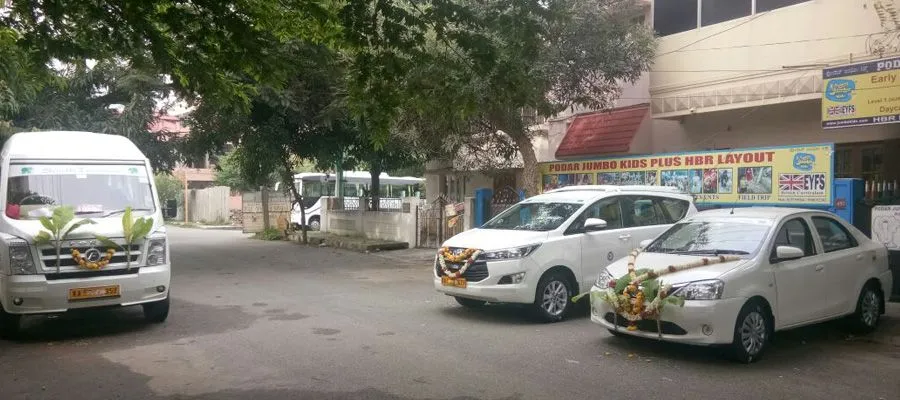
The custom of performing Ayudha Puja for vehicles is especially noticeable in Tamil Nadu. On the day of the festival, roads and commercial districts often have brightly decorated cars, buses, trucks, motorcycles and other vehicles. A driver might see the vehicle as an essential element of his means of earning a living. A farmer could rely on a tractor or some other agricultural vehicle. A businessperson might depend on delivery vehicles for transporting goods. A family might regard its car as an important way of travelling safely together. It is for this reason that cleaning and decorating the vehicle amounts to an act of gratitude. People will apply sandalwood paste and kumkum, put flowers or garlands on the vehicle and say prayers in accordance with their family or community traditions. However, the religious rite should not be regarded as a scientific assurance against accidents or mechanical breakdowns. Proper driving, regular maintenance, working brakes, good tyres and compliance with traffic rules still remain essential to road safety. The festival can nonetheless act as a meaningful reminder to look after the vehicles upon which people depend.
In Tamil Nadu, Ayudha Puja celebration generally starts by cleaning the items which are to be worshipped. The tools, machinery, vehicles, books and other equipment are carefully cleaned and arranged. In homes the items might be put in a special area for the puja; in factories and workshops the machinery and equipment are cleaned and decorated inside the workplace. Flowers, garlands, mango leaves, sandalwood paste, turmeric and kumkum are usually used as part of the traditional decoration. The specific rituals will vary depending on family customs, community practices and religious traditions. Once the objects have been decorated, prayers are offered. Fruits, flowers, coconut and traditional festival foods can be presented as offerings. In many homes and workplaces the celebration is also followed by sharing sweets and other festive food.
A simple yet significant celebration can be held at home through Ayudha Puja. The family can choose the items which are important to their everyday lives and means of earning a living and clean them before putting them next to the household shrine. Students can retain their books and writing materials for the Saraswathi Puja. Musicians are allowed to take their instruments with them. Those who work from home might decide to include their computer or other professional equipment. A family car may also be cleaned and decorated. What matters is not how many objects there are or how valuable they are; a basic household item can be just as full of symbolic significance as a costly machine since the reason for the celebration is to express gratitude for the role that the object plays in daily life.
In Tamil Nadu the observance of Ayudha Puja in offices, factories and industries involves cleaning, decorating and offering prayers to the tools, machinery and equipment used for daily work; the offices will include items such as computers, laptops, printers and other professional equipment, whereas factories and workshops will worship heavy machinery, production equipment and technical tools. Employees usually come together to carry out a collective puja and pray for safety, prosperity and the smooth operation of their workplace, and in some organisations sweets or festive food are also shared. The event also stresses the value of workers, knowledge, and technology, since although machines can aid in production skilled people are necessary for operating and maintaining them. Accordingly, Ayudha Puja is not just an occasion for worshipping the equipment but also one for showing thanks for the work, the skills and the means of livelihood associated with it; moreover, the cleaning and inspection of the equipment carried out during the festival gives the opportunity to spot any maintenance problems, thus making the tradition applicable to both cultural customs and proper care of the workplace.
In Tamil Nadu, Ayudha Puja ceremony honours not only tools and equipment but also the dignity of labour, knowledge and skill. Although a farmer's plough, a carpenter's chisel, a mechanic's spanner, a tailor's sewing machine, an engineer's computer or a musician's instrument may be different, each one stands for hard work, expertise and a means of livelihood. Towards the end of Navaratri students worship books and educational materials as part of Saraswathi Puja, while musicians and artists pay respect to their instruments and creative tools. Many Tamil homes also put on a Golu, bringing families and communities together by means of devotional songs and cultural events. Together, Golu, Saraswathi Puja, Ayudha Puja and Vijayadashami underline the values of knowledge, creativity, skill, work and respect for all professions.
The practical routines connected with the festival make the science of Ayudha Puja easy to understand. Although there is no scientific proof that carrying out puja confers supernatural protection on machines or vehicles, cleaning, inspecting and maintaining tools does have clear practical advantages. Cleaning away dust, oil and dirt enables rust, cracks, loose parts, leaks and other maintenance problems to be seen. For vehicles, the event also provides a chance to check the tyres, brakes, lights, batteries and fluids. Thus, Ayudha Puja in Tamil Nadu offers a chance to link traditional practices with preventive maintenance and workplace safety.
Ayudha Puja also has a psychological and social dimension. The festival prompts people to break away from their everyday routine and to realise the importance of the tools which support their livelihood, their education and their creativity. A farmer's plough, a tailor's sewing machine, a student's books, an artist's instruments and a modern computer all stand as symbols of knowledge, skill and hard work. Therefore, the significance of Ayudha Puja goes beyond worship since it promotes cleanliness, responsibility, gratitude, mindfulness and respect for labour.
Ayudha Puja is also relevant in modern workplaces and communities; cleaning the work areas, organising the equipment and celebrating together can promote teamwork, discipline and a sense of responsibility. The celebration can be more environmentally friendly by using natural or reusable decorations and by avoiding unnecessary waste. Thus, the Ayudha Puja celebrations still manage to link traditional values with contemporary ideas concerning workplace safety, environmental responsibility and respect for the tools which support everyday life.
Preventive maintenance is of great significance in modern engineering, since equipment is periodically checked, cleaned, lubricated and repaired in order to decrease the chance of breakdowns and to enhance its working life. Ayudha Puja is not an engineering maintenance programme, but the custom of removing tools and machines from ordinary use, cleaning them and inspecting them offers a natural chance for maintenance. Someone who runs a workshop and who gets into the habit of cleaning machinery before Ayudha Puja might spot a problem that had earlier escaped notice. Likewise, a person who cleans a car as part of the festival preparations might also decide to have a check on the tyres, the brakes, the lights, the battery and the fluids.
Food plays an important role in almost all Tamil festivals, and the Ayudha Puja celebrations held in Tamil Nadu are no different. The families prepare traditional offerings in accordance with their own customs and regional traditions. Sundal is especially linked with the Navaratri festivities, and the offerings can also consist of fruits, coconut, payasam, pongal, vada, suyyam, aval and other traditional foods. Following the puja, the offerings are given to family members, friends, neighbours or colleagues. The act of sharing food gives the religious celebration a social aspect.
Ayudha Puja and Vijayadashami are closely linked; traditionally Ayudha Puja takes place on the ninth day of Navaratri and Vijayadashami is kept on the tenth day. The symbolism involved in the change from one day to the next is important, since those tools and books which had been set aside for the purpose of worship are now picked up once again, this standing for a return to work and study. Vijayadashami is also linked with new beginnings, and in Tamil cultural traditions it is seen as a favourable time for Vidyarambham, which is the ceremonial start of education for young children. What this results in is a beautiful sequence of steps—knowledge is respected, the tools are honoured and then learning and work start once more.
The practice of Ayudha Puja in Tamil Nadu shows how religious traditions can adapt to changing social conditions while still retaining their main meaning. The festival is also witnessed in agricultural villages, among traditional artisan communities, in urban homes, factories, offices, schools, workshops and commercial establishments. The way it is expressed differs from one place to another, but the basic ideas stay well known—that is, there is a respect for work, gratitude towards one's means of livelihood, reverence for knowledge and an appreciation of the tools by means of which human beings carry out their duties. One of the distinctive features of Tamil festival culture is the way in which spirituality is combined with everyday life.



Share This News