No.4, Annai Avenue, Vasanth Nagar EXTN,
Srirangam, Trichy, Tamil Nadu ,620006.
CIN: U31100TN2010PTC078389
DUNS Number: 859496557

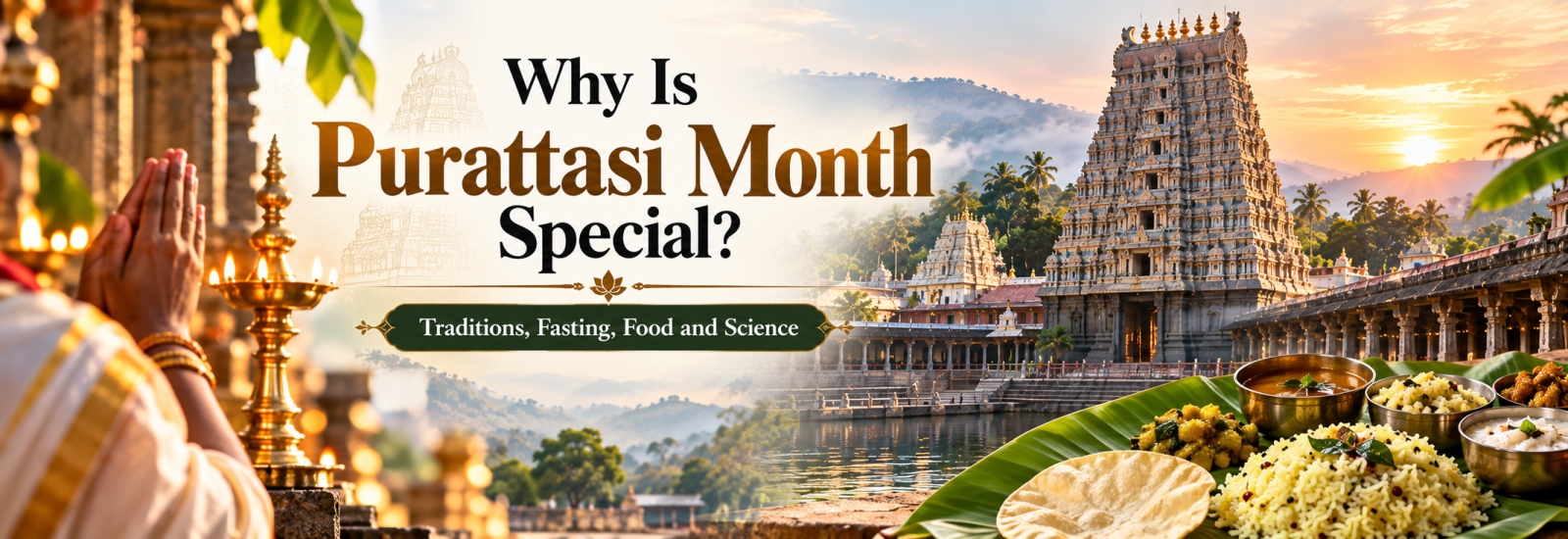
As Purattasi dawns, Tamil Nadu comes alive with a rhythm shaped by tradition and devotion.
Temple bells chime more often, the air fills with devotional songs, and homes bustle with the preparation of traditional dishes deeply tied to this sacred month. For many Tamil Hindu families, Purattasi is a time to pause, reflect on spirituality, and weave age-old traditions into their daily lives.
The Saturdays during Purattasi hold a particularly cherished spot in many households. Families flock to Perumal temples, observe fasting or dietary restrictions, whip up special offerings, and gather for prayer. These customs have been lovingly passed down through generations, transforming Purattasi from just another month on the calendar into a significant part of Tamil cultural and religious identity.
But what makes Purattasi so special—and why have these traditions continued for generations?
Beyond devotion and tradition, some Purattasi practices can also be viewed through the lens of food, seasonal habits, routine, and well-being. Could there be practical reasons behind some of the customs? And what does modern science actually say about them?
From the importance of Purattasi Saturdays to fasting, vegetarian meals, temple visits, and traditional offerings, let’s explore what makes this month so special—and how tradition intersects with our contemporary understanding of mindful living today!
Purattasi is the sixth month in the traditional Tamil calendar, typically falling between September and October.
For devotees of Lord Vishnu, it is an important period for prayer and worship. Many families observe particular food practices, visit temples, and follow fasting or other forms of religious discipline.
This month is a cherished time in Tamil culture, bringing families closer through age-old traditions. Children watch their parents and grandparents prepare festive offerings, visit temples, and follow meaningful customs. These shared moments create lasting memories while passing Tamil heritage from one generation to the next, keeping traditions vibrant, relevant, and deeply connected.
In 2026, Purattasi falls during September and October. Calendar references commonly place the month from September 18 to October 17, although devotees should check their local panchangam for precise observance timings.
Purattasi is traditionally associated with Lord Vishnu, and many devotees consider the month especially suitable for worshipping Perumal.
The month of Purattasi is regarded as highly auspicious and sacred, as it is devoted to Lord Vishnu. According to Hindu beliefs, around 5,000 years ago, Lord Vishnu descended to Earth during this holy month as Lord Varaha to protect the world from demons. Devotees consider Purattasi a divine month and observe it with devotion and prayers, expressing their gratitude to Lord Vishnu for protecting the world and helping preserve it from the forces of Kali Yuga.
The religious significance of this occasion is reflected in the large number of devotees who visit Vishnu temples during this time. For some families, Purattasi is also a time to renew their spiritual routine through prayer, fasting, charity, and temple visits.
Saturdays hold a special place during Purattasi, adding a unique cultural and traditional significance to the month’s celebrations and observances.
Known as Purattasi Sani, these Saturdays are deemed particularly auspicious by many. Families may visit a Perumal temple, observe a fast, or prepare a special offering at home.
Traditions may vary from family to family, with some celebrating through elaborate rituals and others keeping things simple. Yet, each way of celebrating adds its own warmth, meaning, and charm, making these traditions special and unique to every household.
Some of the common practices include:
The practices may differ from one household to another, but the underlying idea is similar: Purattasi is a time for devotion, discipline, and togetherness.
For many Tamil families, especially those who revere Lord Venkateswara, Purattasi holds deep spiritual significance. During this month, many opt to skip non-vegetarian food and embrace a simple vegetarian diet as part of their religious practice. Beyond its spiritual roots, some folks link this tradition to the seasonal shifts that occur around September and October. As the weather and humidity start to change, people might notice shifts in their appetite or digestion. Heavier, richer, or oil-laden foods, including certain non-vegetarian options, can sometimes be harder to digest during these transitions.
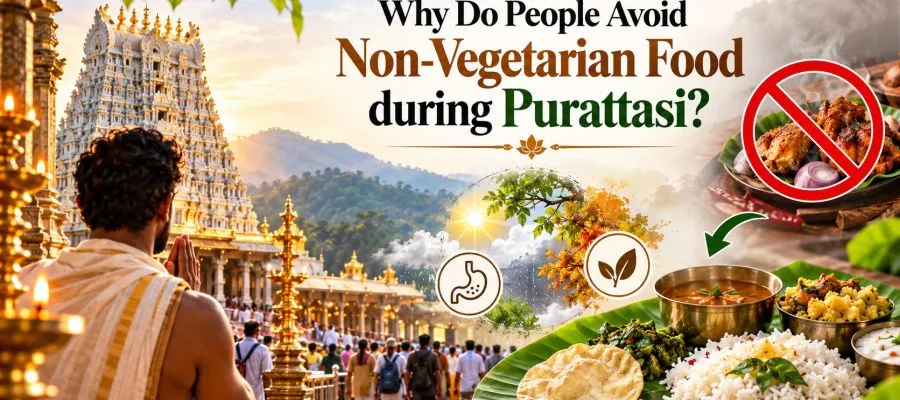
So, opting for lighter, home-cooked vegetarian meals can help many feel more at ease and keep their eating habits balanced. However, this does not mean that eating non-vegetarian food during Purattasi is scientifically proven to cause digestive problems. Digestion varies from person to person, and factors such as food preparation, portion size, and individual health can also affect how well a food is digested.
Ultimately, avoiding non-vegetarian food during Purattasi combines faith, tradition, mindful eating, and self-discipline. It allows families to slow down, eat, spend time together, and focus on spiritual well-being.
Purattasi Food: From Everyday Meals to Special Offerings
Food plays a vital role in any Tamil festival, and Purattasi is no different. Families may prepare dishes including rice, sambar, vegetable curries, sundal, vadai, pongal, payasam, and other traditional foods. The specific menu often reflects family traditions and the type of offering being made.
Purattasi Thaligai refers to the special food prepared as an offering during the month.
The preparation itself can become a family activity. One person may prepare the rice, another may make the vegetable dishes, while someone else prepares sweets or an offering for the temple.
The meal is not simply about eating- it is connected with prayer, hospitality, family tradition, and offering.
Purattasi is a month brimming with devotion, discipline, delicious traditional food, temple visits, and cherished family gatherings. For generations, these customs have woven themselves into the fabric of Tamil culture and religious life.
Nowadays, many folks are curious about whether these age-old practices have any ties to modern concepts of health and well-being. It’s fascinating to explore Purattasi from both angles.
On one hand, tradition infuses these practices with spiritual and cultural significance; on the other, modern science offers insights into the everyday benefits they may provide. Purattasi intricately blend belief, devotion, familial principles, and cultural legacy, traditions that hold significance through the ages.
While some of these practices can be understood through a scientific lens, others hold a unique meaning shaped by generations of belief and tradition. Each ritual contributes to the rich spiritual and cultural tapestry of Purattasi, making this month a special time for reflection, togetherness, and devotion.
Here are some of the practices and what we can reasonably understand about them.
A traditional vegetarian meal often features a colourful array of vegetables, lentils, beans, chickpeas, fruits, and grains.
These foods can provide dietary fibre, vitamins, minerals, and other essential nutrients when included as part of a balanced diet. In this way, Purattasi can be a meaningful time to celebrate tradition while also embracing nourishing and diverse food choices.
Ultimately, the nutritional value comes from the variety, quality, and balance of the foods we eat. Purattasi provides the occasion, while a well-balanced diet provides the health benefits.
Different families follow different forms of fasting. Some may avoid particular foods, while others may eat only once or choose simple vegetarian meals.
Modern research has also explored intermittent fasting and time-restricted eating. Some research suggests that certain fasting patterns may support aspects of metabolic health.
Fasting continues to attract interest as researchers explore its potential to promote metabolic well-being and support healthy changes over time.
This makes Purattasi fasting not just a significant religious observance but also an intriguing link to the nutritional science being explored today.
It offers devotees an opportunity to practise mindful eating, simplicity, and self-discipline while continuing a cherished spiritual tradition.
Purattasi brings people together. Neighbours gather at temples, families embark on journeys side by side, and there's a lovely exchange of greetings and food. Older generations pass down traditions and stories to the younger ones, creating a rich tapestry of shared experiences. These everyday interactions can be meaningful.
Social connections and a sense of belonging are vital for our overall well-being. Community activities offer a chance to bond with others who share similar traditions and values. In this way, Purattasi beautifully intertwines faith and community, creating a warm and welcoming space.
For many devotees, prayer and chanting are central to the Purattasi experience. The soothing rhythm of familiar prayers can create moments of peace and reflection amid a busy routine. It creates a peaceful space for reflection, strengthens faith, and brings people closer together. When practiced together, these moments can fill homes with harmony, positivity, and a shared sense of belonging.
Purattasi is a wonderful time for devotees and travellers to explore Tamil Nadu's Vishnu temples.
Tiruchirappalli is home to the famous Sri Ranganathaswamy Temple, an important pilgrimage site for Vaishnavites in Tamil Nadu. Its massive temple complex, architecture, and long religious history make Srirangam an important pilgrimage destination.
Located in Madurai, the Koodal Azhagar Temple is dedicated to Lord Vishnu and plays a vital role in the city's vibrant temple heritage.
Just outside Kumbakonam, the Sri Oppiliappan Temple is another important Vishnu shrine that attracts devotees year-round.
Tirumala, in Andhra Pradesh, is one of the most renowned pilgrimage centres linked to Lord Venkateswara. Purattasi is widely regarded as an auspicious month, marked by special prayers and devotion among worshippers.
You don’t need to head to a famous pilgrimage site to soak in the spirit of Purattasi. Many towns and villages across Tamil Nadu boast their own Perumal temples, where local communities celebrate the month in their unique and traditional ways.
If you're planning to visit a temple during Purattasi 2026, the month falls across September and October. Here are the important dates to keep in mind for 2026:
Dates and observance timings can vary according to the calendar or panchangam followed in a particular location, so it is always worth checking with the temple before planning a special visit.
You can immerse yourself in the spirit of Purattasi by:
Purattasi is more than a month filled with traditions; it’s a beautiful journey that weaves together faith, culture, family, and togetherness. From serene prayers and traditional vegetarian meals to temple visits and heartfelt family rituals, this month offers a wonderful chance to immerse yourself in Tamil Nadu’s rich spiritual heritage.
Planning a temple visit during Purattasi? Turn it into a memorable journey through Tamil Nadu’s sacred heritage. From ancient temples steeped in history to vibrant pilgrimage towns alive with devotion, each destination offers a unique glimpse into the cherished traditions, rituals, and cultural heritage passed down through generations.
Seeking a deeper spiritual experience? Let Tamil Nadu Tourism take you on a journey through the state’s sacred heritage.
Explore our spiritual tour packages, choose the destination that inspires you, and get ready for a memorable journey filled with devotion, culture, and unforgettable experiences.
No FAQ available for this Blog.


Share This News