No.4, Annai Avenue, Vasanth Nagar EXTN,
Srirangam, Trichy, Tamil Nadu ,620006.
CIN: U31100TN2010PTC078389
DUNS Number: 859496557

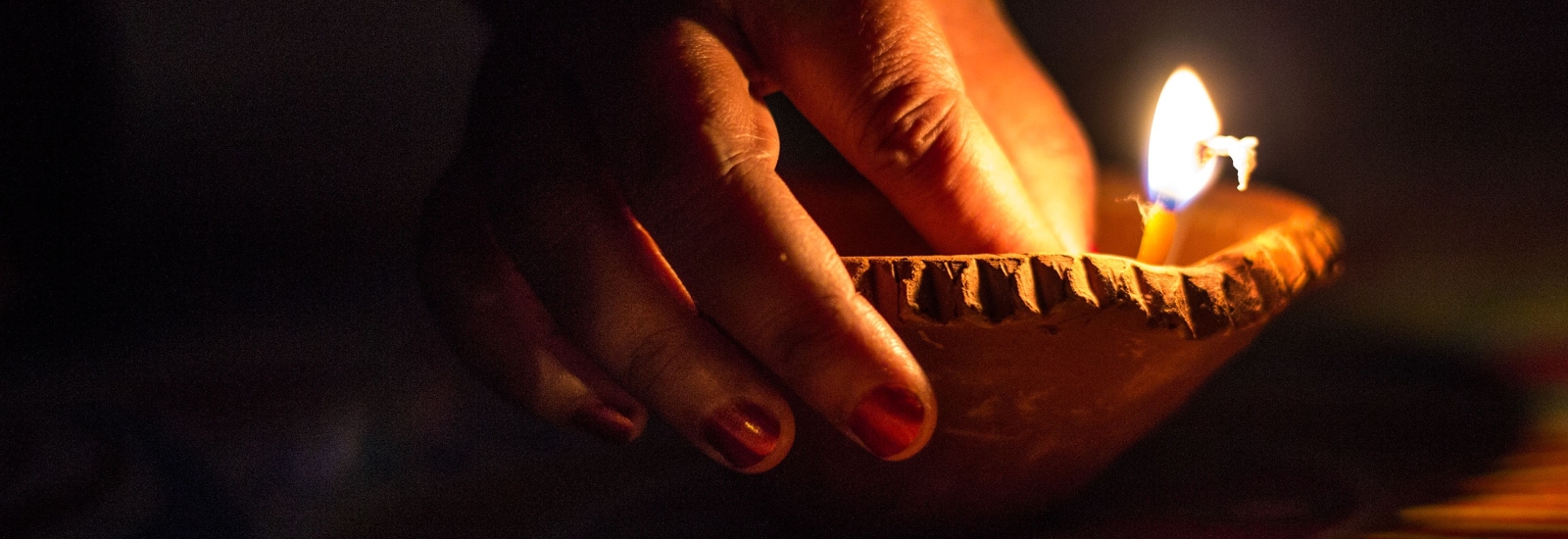
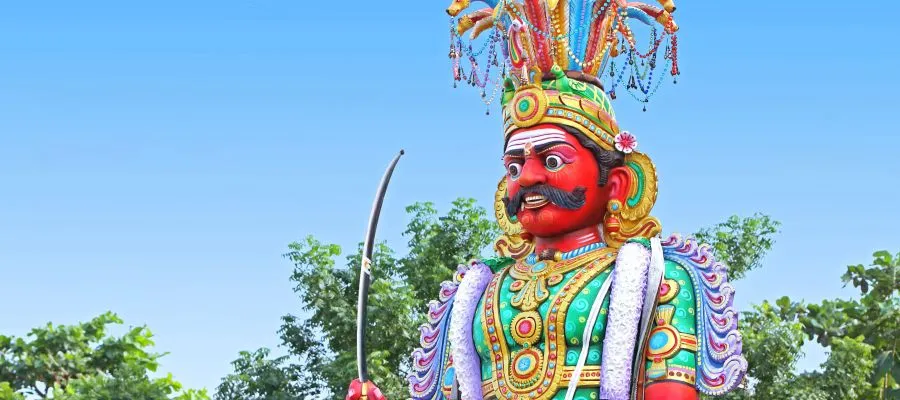
Within the spiritual world of South India, the custom of Kula Deivam has the greatest importance. Handed across families over generations, Kula Deivam worship connects to heritage, safety, belonging, and enduring legacy. Although there is great urban development, the connection linking kin groups to their ancestral deity is becoming very significant. What people call “Kula Deivam” is an episode of layers shaped by faith, history, and shared memory. Understanding this in English terms means viewing beyond translation into lived experience. Spiritual spaces dedicated to these deities offer more than host rituals—they play a significant role in protecting the endurance. Rootedness is reflected not just in prayer but in daily choices made silently, every year. Such places act less like monuments and more like quiet holders of unbroken threads.
Deeply rooted in the tradition of South India, “Kula Deivam” remains a sacred figure linked to one specific bloodline. "Kula" means kinship group, ancestry, or inherited line, and "Deivam" means god, and "Kula Devata" means goddess. Kula Deivam in English means Ancestral Deity, Family Deity or Guardian Deity—a divine presence bound to a specific lineage and worshipped from one generation to the next. This deity is believed to watch over the well-being of the family, offer protection, prosperity, and divine guidance. Unlike widely worshipped household gods like Vishnu or Shiva, a Family Deity is inherited and intimate deeply rooted in ancestry rather than shaped by widespread worship.
Explore Naadi Astrology Tour Package
Together, these terms form a significant identity—a guardian spirit deeply rooted within heritage, offering protection, guidance, and unseen oversight emerging through belief across generations. Unlike the Tamil deities that are widely worshipped, a Kula Deivam remains intimately bound to one family or clan. Its origin often dates back to a turning moment in the past—an ancestor who stood as a pillar during hardship, guided through unpredictability, or safeguarded in crisis. What starts as divine intervention gradually transforms into devotion. In due course, protection once granted becomes an ancestral obligation.
As ancestors are revered as guardians in spirit, families honor their Kula Deivam for health, prosperity, safety, and continuity. Even if there are evolutions in lifestyles, significant moments like births, weddings, stepping into new homes, journeys, or ventures are still marked by first seeking the blessings of the family deity. For many, to start without that acknowledgment feels unfulfilled, as though a crucial connection has been left untouched. The essence of worshipping Kula deivam lies in shared worship, as it strengthens the relationships within extended families. Worshipping together, observing rituals, and celebrating milestones pave the way for trust, responsibility, and mutual regard. These shared acts connect individuals beyond commitment, forming an enduring social fabric. Many families even mediate their conflicts—over property, marriage, or daily life—through values shaped by their shared belief without external enforcement.
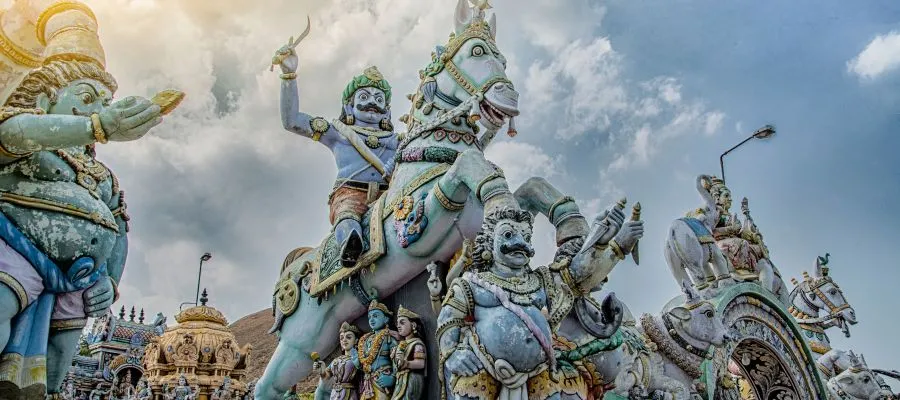
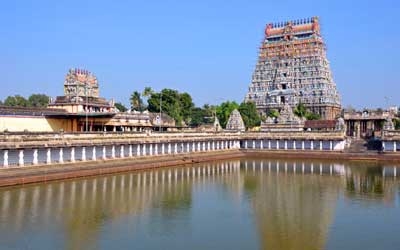
Kula Deivam Kovil, or Kula Deivam temple in Tamil Nadu, is a sacred site connected to a particular family's ancestor god. Found in high numbers at the ancient village settings, these sacred shrines appear on the riverbanks, along woodland edges, or within tranquil countryside spots—specific locations thought to be graced by the divine presence guarding that entire bloodline. Apart from other temples in Tamil Nadu, Kula Deivam temples often appear small in size but carry a deep personal meaning. Some are located under old trees, and a few consist of nothing but stacked stones. In certain families, the smaller shrines have grown into built temples with sanctums and compound walls—formed by choice, devotion, or changes carried forward from the previous generations.
Every year, visiting the Kula Deivam temple carries a deep significance. Often, Kula Deivam temple trips align with local celebrations or spiritual dates on the calendar. Families living in different places in the urban areas or from distant countries often come together, drawn by tradition. Worship and reconnection with ancestors occur through ceremonies and tranquil devotion. One of the family members plays the role of the priest, especially the eldest. Prayers are offered seeking protection, guidance, and continuity. The rituals also play a significant role in shaping the minds of future generations. By observing these acts, children and teens begin to understand the importance of the Kula Deivam within the family. Through ancestral stories and shared ceremonies, they learn continuity, which encourages them to carry the practice forward, assuring the roots are never severed.
Explore 10 Days Tamilnadu Temple Tour
The rituals performed at a Kula Deivam temple carry simplicity, reverence, and deep familial purpose rather than strict formalism. Usually, the day begins with cleansing—both the space and the self. Family members bathe, wear traditional attire, and clear the shrine area. An elder of the family or a village priest leads the worship. Then one of the elder members of the family leads the worship. He performs Abishekam (Sacred Bath) for the idol and adorns it with fresh flowers, turmeric, and kumkum. Prayers and chants are recited, awakening the Kula Deivam by name and lineage.
Ancestors are remembered, invoking their presence and protection. Then, sacred offerings follow; women in the family prepare Pongal (sweet jaggery rice) in a traditional clay pot. They also offer fruits, coconuts, betel leaves, or lamps filled with ghee or oil, which are placed in front of the deity. In certain rural traditions, animal offerings (goat or lamb) are made according to vows taken by the bygone generations. The ritual ends with shared food and blessings. Prasadam (sacred food offerings) is distributed, and stories are shared. In this way, the ritual serves both as worship and remembrance, assuring the lineage remains spiritually anchored.
Kula Deivam temples in Tamil Nadu seamlessly blend local spiritual practices with well-organized religious traditions. Several rites are found nowhere else, including the ancient custom of honoring the guardian deities after dusk. These night ceremonies often arise from agrarian life, where farming determines both time and prayer. During Mahāśivarātri, many families unfailingly visit their Kula Deivam shrine as well. The sacred night dedicated to Lord Shiva is believed to be spiritually dynamic—a period when ancestral energies are at their peak and prayers carry greater potency. Visiting the Kula Deivam temple on this night is viewed as a way to seek protection, express gratitude, and rekindle the bond between Shiva, the family deity, and the lineage that connects the living to those who came before.
Tamil Nadu has numerous Kula Deivam that are worshipped by different families based on shared faith yet stories passed by oral narrations but few Kula Deivams remains most popular across Tamil Nadu which is worshipped by majority of families. Below are the popular Kulam deivam list worshipped in Tamil Nadu.
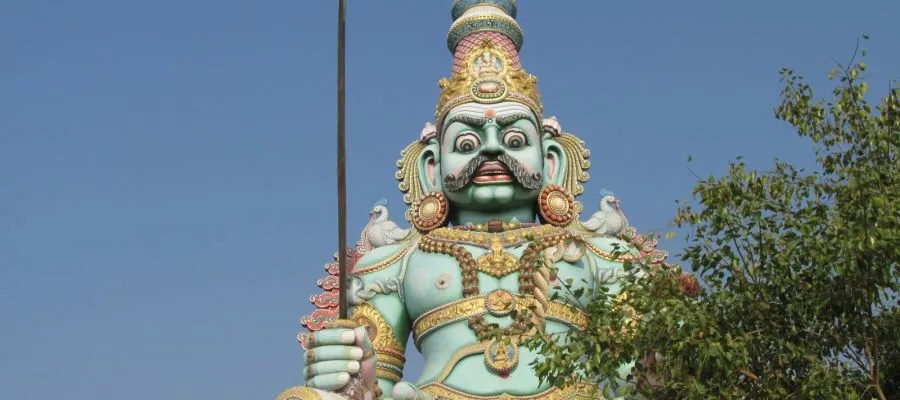
Karuppasamy is regarded as a very powerful Kula Deivam in Tamil Nadu and often referred to by people as “Kaaval Deivam” (guardian deity). Widely renowned as the God of Justice, Protection, and Truth, he is especially worshipped in the rural areas in Tamil Nadu and Kerala as a formidable guardian who wards off evil and upholds dharma. Commonly portrayed as a dark-skinned warrior perched on a white horse holding a billhook, Karuppasamy symbolizes immense strength and authority. He is sometimes connected with aspects of Shiva, Vishnu (as Kalki), or Bhairava and is worshipped by devotees seeking quick solutions, protection, and divine blessings.
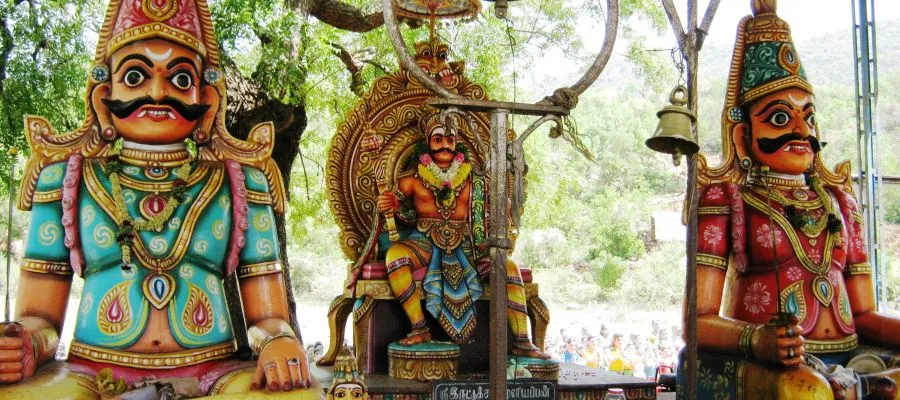
The word Ayyanar or Aiyanar is derived from the Tamil word “Ayyan,” meaning “elder” or “lord,” reflecting his role as a respected elder brother figure and guardian of his devotees. He is a powerful Tamil Hindu folk deity, worshipped primarily in rural South India and Sri Lanka, where he safe guards villages, promises fertility, and offers prosperity. Ayyanar is commonly portrayed as a powerful warrior riding a horse or an elephant, holding weapons like sword or scepter, and sometimes in the company of his consorts like Poorna and Pushkala. His main prominent role is to guard villages against evil forces and external hazards. His shrines are generally located at the village peripheries and are easily identifiable by large, colorful clay statues of Ayyanar, his animal mounts, and his powerful attendants like Karuppasamy.
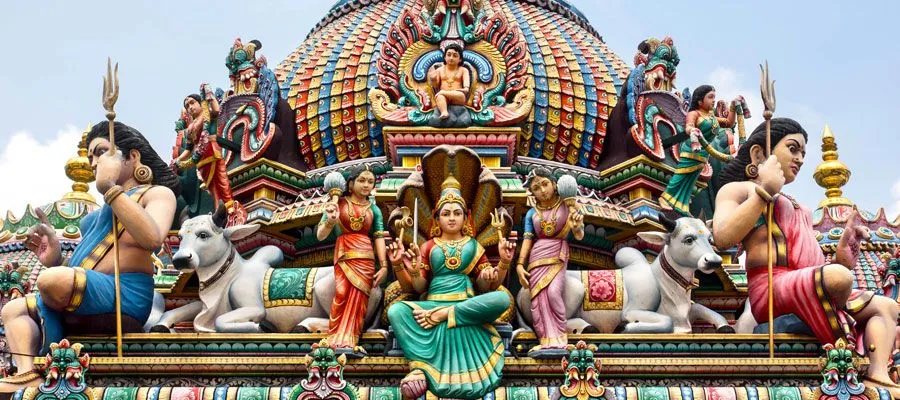
Mariamman is the most revered South Indian Hindu folk goddess. The name Mariamman is derived from two Tamil words: “mari” means rain, and “amman” means mother goddess, worshipped primarily in Tamil Nadu as the mother goddess of rain, fertility, and prevention against diseases, especially smallpox and cholera. Regarded as a form of Durga or Parvati, Mariamman is believed to grant prosperity, health, and protection to her devotees. She is often portrayed as a radiant woman clothed in red or yellow, holding symbolic things like a trident, bowl, or sword. Mariamman is celebrated through vibrant festivals, most notably the Adi festival in Tamil Nadu in late summer and autumn.
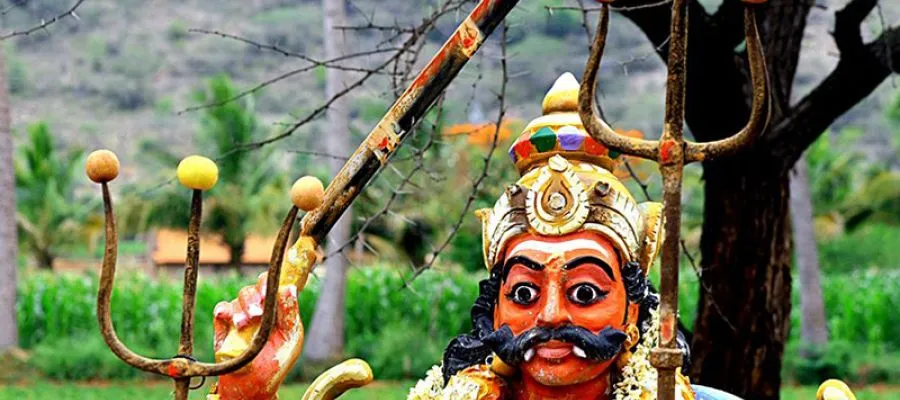
Sudalai Madan, also known as Madan Thampuran, is a popular guardian spirit (Kaval Deivam), widely worshipped in Tamil Nadu and Kerala. His name literally translates to “chief of the cremation ground,” highlighting his role as the guardian of the sudukadu (burial ground)—a liminal space connected with death, transition, and transformation. He is regarded as a powerful protector who wards off evil forces, especially those associated with burial sites and cremation grounds (sudalai). In folk belief, Sudalai Madan is said to embark on what is known as Mayana Vettai, literally meaning a “burial-ground hunt.” Where he wanders through burial grounds at night to confront, restrain, and drive away restless spirits, negative energies, and malevolent forces linked with spaces of death.
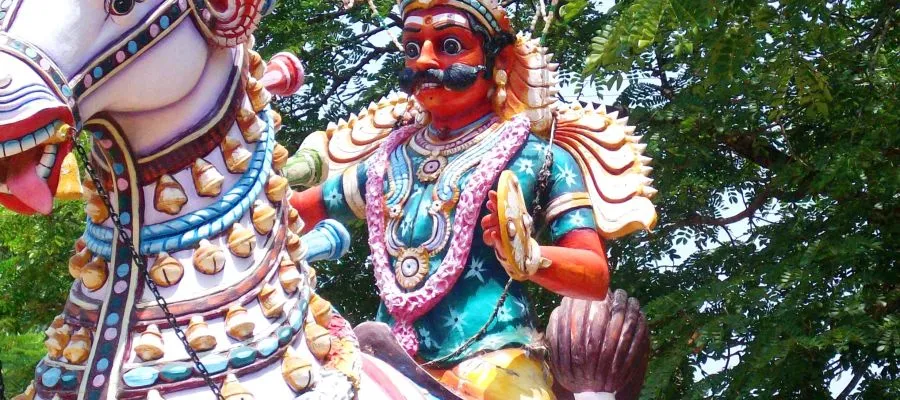
Muneeswaran (Muneeswarar) is a Hindu guardian deity widely worshipped in Tamil Nadu who is revered as a village protector and family deity. Revered as an aspect of Lord Shiva, he embodies protection, strength, and justice. The name combines Muni (sage) and Eswara (Shiva), signifying Shiva’s ascetic form. Rooted in Tamil folk tradition, he is portrayed as a powerful figure holding a trident or sword, sometimes riding a lion, and is invoked to ward off evil and assure well-being. His worship is common across South India, especially in rural Tamil in districts like Madurai and the villages around it.
What connects Tamil families is seldom spoken in grand language. Kula Deivam drifts silently through everyday life, without spectacle or display. Even many years before any ancient temples were built or cities took shape, families functioned harmoniously through ancestral guardians for guidance, protection, and strength. Even today, this belief stays at the pinnacle of faith—the deep conviction that the only guidance one truly trusts comes from the Kula Deivam worship.
Unlike deities worshipped for personal wishes, Kula Deivam is viewed as the guardian to the entire family line. Prayers are done together, connecting ancestors, the present generation, and those yet to come. Because this worship is shared, it creates a deep sense of belonging—each person feels they are part of a story much greater than their own life.
For several Tamil families, home is not just a place to stay. Even when they leave their own villages to settle in other cities and countries, their ancestral deity keeps them connected. Land and houses may disappear over a period, but the temple connected to the family remains. Returning to it during important occasions or before beginning something new deepens faith and strengthens the bond within the family and is believed to welcome good fortune.
Explore All Tamil Nadu Temple Tour Packages
For many Kula Deivams like Karuppasamy, Ayyanar, and Muniswaran, truth and right conduct are significant. These deities are believed to guard justice and uphold righteousness. Elders often say the deity is always watching, which reminds everyone to act responsibly and always have morals. This belief does not need a loud expression—it stays present in daily actions and decisions.
Right from birth to major life events, families often start by worshipping Kula Deivam. Newborns are blessed, marriages follow ancient rituals, and new ventures begin with an offering. Even housewarmings include honoring of ancestors. Each moment links the individual to something much older, quietly weaving strong belief into daily life through small, meaningful acts.
Sometimes logic has no answers, but the belief in Kula Deivam stays strong. Tales of protection, dreams, small signs, and kept promises are shared from one generation to the upcoming generations. Whether seen as sacred guidance or family tradition, this faith invites comfort and stability over a period. At its heart, worshipping Kula Deivam keeps Tamil traditions alive. Memories are passed down through rituals and strong traditions and not through books. Values are learned through daily worship, not formal teachings. In this shared devotion, families feel a strong sense of belonging, carrying their history forward even when it is never written down.
Read more about Tamil Nadu Tour Packages curated by Tamilnadutourism.com and explore journeys designed exclusively for you.

Share This News