No.4, Annai Avenue, Vasanth Nagar EXTN,
Srirangam, Trichy, Tamil Nadu ,620006.
CIN: U31100TN2010PTC078389
DUNS Number: 859496557

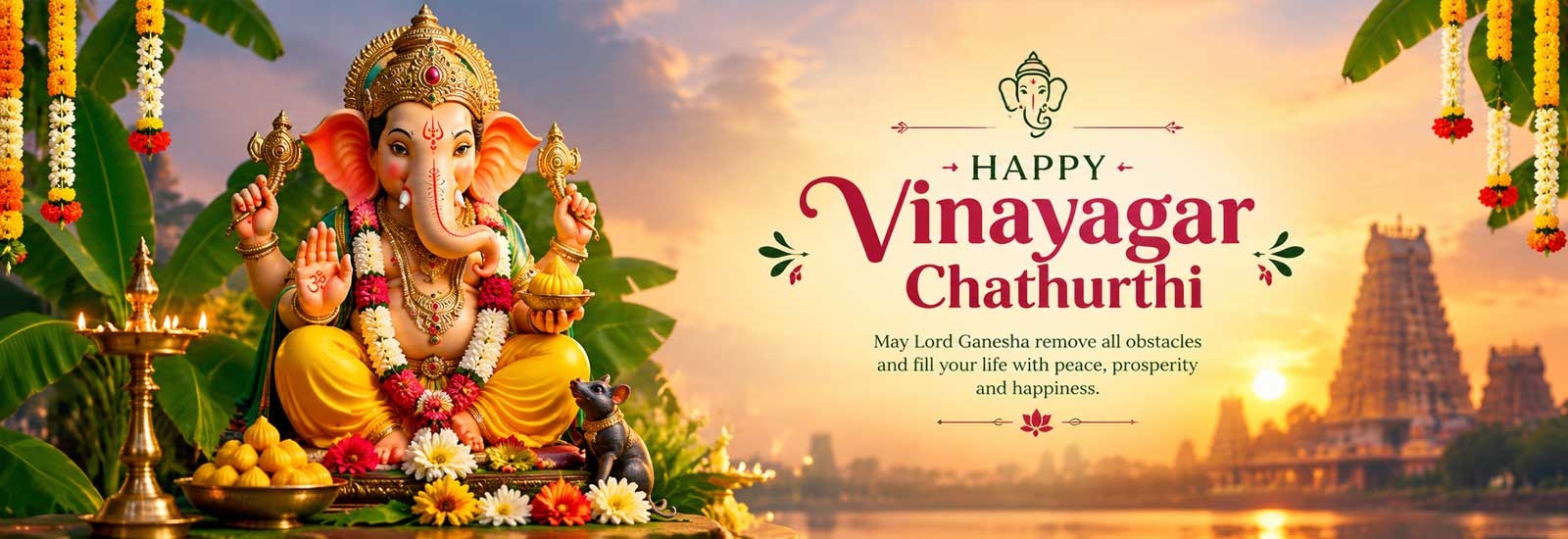
Vinayagar Chathurthi, also referred to as Ganesh Chathurthi or Ganesh Chaturthi, is one of the best-known Hindu festivals which honours Lord Ganesha. It is celebrated on September 14, 2026 with great devotion all over India and commemorates the birth of Lord Ganesha, the popular elephant-headed god who is known as the remover of obstacles and as the god of wisdom, prosperity and new beginnings.
Vinayagar Chathurthi, also referred to as Ganesh Chathurthi or Ganesh Chaturthi, is one of the best-known Hindu festivals which honours Lord Ganesha. It is celebrated on September 14, 2026 with great devotion all over India and commemorates the birth of Lord Ganesha, the popular elephant-headed god who is known as the remover of obstacles and as the god of wisdom, prosperity and new beginnings.
During Vinayagar Chathurthi families take their Ganesha idols into their homes, carry out special poojas, prepare traditional festive food and gather together with their family and friends. In Tamil Nadu the festival is generally called Vinayagar Chathurthi and is celebrated in homes, temples and within the communities all over the state. The festival is traditionally brought to an end with Ganesh Visarjan, which is the ritual immersion of the Ganesha idol in water. The timing of the immersion will vary according to local customs and might occur after one and a half days, three days, five days, seven days, nine days or ten days.
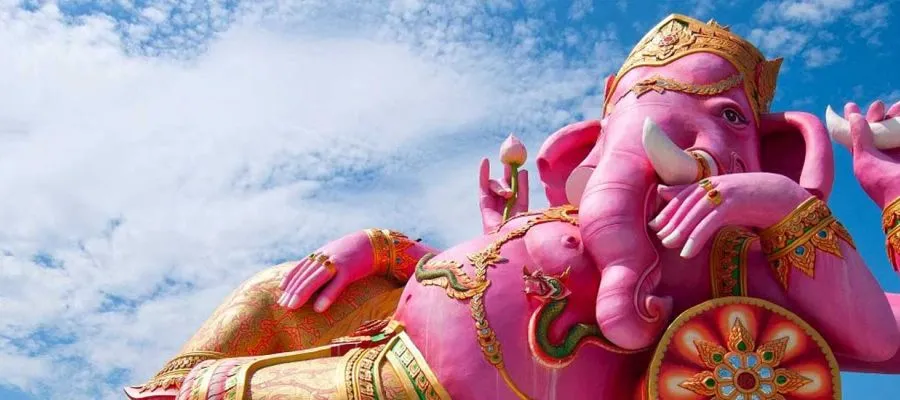
Vinayagar Chathurthi is a Hindu festival which marks the birthday of Lord Ganesha, the child of Lord Shiva and the Goddess Parvati. The festival takes place on the Chaturthi, that is, the fourth day, of the Shukla Paksha, the increasing phase of the moon, in the Hindu month of Bhadrapada. It usually occurs in August or September each year, the date however varying depending on the Hindu lunar calendar. The manner in which Ganesh Chathurthi is celebrated varies from one region to another. In some families the festival is observed with a simple home Vinayagar Chathurthi pooja, whereas in other cases communities arrange bigger celebrations featuring beautifully decorated Ganesha idols, cultural programmes, devotional music and public events. For the devotees, Vinayagar Chathurthi provides an opportunity to ask Lord Ganesha for wisdom, happiness, prosperity, success and for the removal of obstacles.
We celebrate Vinayagar Chathurthi mainly in order to honour the birth of Lord Ganesha and ask for his blessings. Lord Ganesha is well known by the name Vighnaharta, which means that he is the remover of obstacles; he is also connected with wisdom, knowledge, intelligence, prosperity and good fortune. That is the reason why Lord Ganesha is usually worshipped before starting important tasks. People are accustomed to praying to Ganesha before:
• Starting a new business
• Entering a new home
• Beginning education
• Starting a new project
• Beginning an important journey
• Conducting weddings and religious ceremonies
Vinayagar Chathurthi is therefore significant in a way that extends beyond the celebration of a religious event; it stands as a symbol of the hope for a favourable start to life and of the strength needed to overcome difficulties.
The history of Vinayagar Chathurthi is closely linked to the traditional tales concerning Lord Ganesha and the way he was born. In one of the best-known versions of the story, Goddess Parvati made Ganesha using turmeric paste while Lord Shiva was away; she then told Ganesha to keep guard at the entrance and instructed him to prevent anyone from going in. When Lord Shiva came back, Ganesha stopped him from entering because he had been following his mother's orders. This caused a clash between Lord Shiva and Ganesha. In the course of the argument, Lord Shiva cut off Ganesha's head. Upon finding out what had happened, Goddess Parvati became very angry and demanded that Ganesha be brought back to life. Lord Shiva then told his followers to take the head of the first living creature they met. They brought back the head of an elephant. Lord Shiva then put the elephant's head onto Ganesha's body and brought him back to life. He then blessed Ganesha and stated that he would be worshipped before all the other deities and before any important undertaking. This traditional story is one of the reasons why Lord Ganesha is seen as the remover of obstacles and as the god of new beginnings.
The entire family can have a simple and significant experience when celebrating Vinayagar Chathurthi at home. Before bringing the idol back into the house, families generally clean and decorate the house and set aside a special area for the pooja. This platform can be adorned with flowers, traditional lamps, kolam and other festive decorations. On it a clay Ganesha idol or an eco-friendly Ganesha idol can then be placed. The idol can afterwards be decorated with flowers, sandalwood paste, turmeric, kumkum and traditional ornaments. The families then carry out the Ganesh Chathurthi pooja, offering flowers, fruits, coconut, sweets and other traditional items. Children can also take part in the celebrations by helping with the decorations, preparing the flowers and learning the prayers connected with Lord Ganesha.
One of the most important elements of the festival is the Vinayagar Chathurthi pooja; the specific rituals will vary depending on family traditions and regional customs.
Aarti concludes the pooja with the offering of flowers and the recitation of devotional prayers. These rituals are carried out in order to show devotion and to ask Lord Ganesha for the family's happiness, prosperity and well-being.
Food plays an important role in all Indian festivals, and recipes for Vinayagar Chathurthi are especially liked by families who are making traditional offerings to Lord Ganesha. One of the most well-known offerings connected with Ganesha is the modak, a traditional sweet which is made with ingredients like coconut and jaggery. In Tamil Nadu, kozhukattai are especially popular as part of Vinayagar Chathurthi. The families prepare various kinds of kozhukattai and present them to Lord Ganesha during the festival.
• Sweet kozhukattai
• Modak
• Sundal
• Coconut
• Fruits
• Vadai
• Payasam
• Traditional rice dishes
• Coconut and jaggery preparations
The specific dishes served on Vinayagar Chathurthi will depend on family customs and regional practices.
Kozhukattai is one of the traditional dishes most closely linked with Vinayagar Chathurthi in Tamil Nadu, and sweet kozhukattai is usually made using a coating of rice flour and a filling consisting of coconut and jaggery. The dumplings are steamed and then given to Lord Ganesha as prasadam. In many Tamil homes preparing kozhukattai for Vinayagar Chathurthi is also a family tradition, with parents and grandparents often teaching the children how to make it, which makes it a special part of the festival. Following the pooja, the kozhukattai and the other offerings are distributed among the family and guests as prasadam.
In Tamil Nadu the Vinayagar Chathurthi festival is observed with great devotion and enthusiasm in homes, temples and neighbourhoods all over the state. Families set up idols of Ganesha in their homes and carry out traditional poojas. The temples may hold special abhishekams, poojas and devotional events during the festival. In cities and towns, bigger idols of Ganesha may be placed in public areas. The streets and neighbourhoods can turn festive with the use of decorations, lights, devotional music and community gatherings. In cities such as Chennai, Coimbatore, Madurai, Tiruchirappalli and Salem, devotees have the opportunity to take part in various kinds of Vinayagar Chathurthi celebrations. The festival also fosters a strong sense of community since neighbours come together to organize the celebrations, offer prayers and distribute prasadam.
Even though there are particular customs associated with Vinayagar Chathurthi in Tamil Nadu, Ganesh Chathurthi is observed in many different ways all over India. In Maharashtra, for example, the festival is especially famous for its grand celebrations, during which big Ganesha idols are set up in public pandals. Families and communities come together to offer prayers, take part in cultural programmes and engage in devotional activities. In Karnataka, Andhra Pradesh, Telangana, Kerala, Goa and other parts of India there are also their own particular Ganesh Chathurthi traditions. Even though the way the festival is celebrated differs, devotees everywhere unite to worship Lord Ganesha and ask for his blessings.
Celebrating Vinayagar Chathurthi in an eco-friendly manner is a great way of marking the festival while taking care of the natural environment. Nowadays, many devotees opt for an eco-friendly Ganesha idol which is made from natural clay and other biodegradable substances. Since traditional clay idols tend to dissolve more readily during immersion, they are easier to dissolve. In order to make their Vinayagar Chathurthi celebration more environmentally friendly, families can select natural decorations and cut down on the use of plastic and harmful materials.
Some simple ideas include:
• Choosing a natural clay Ganesha idol
• Avoiding chemical-based paints
• Using flowers and reusable decorations
• Reducing plastic decorations
• Using traditional lamps
• Following designated immersion facilities
• Choosing responsible immersion methods
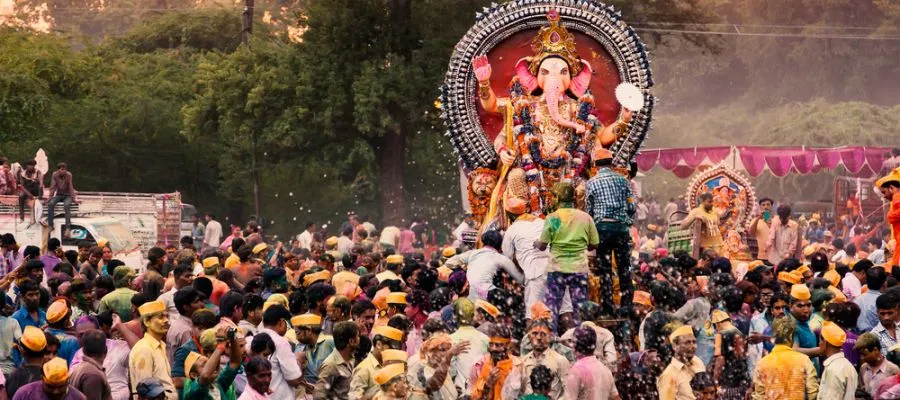
The ceremonial act of immersing the Ganesha idol takes place at the conclusion of the festival which occurs on September 24, 2026. Prior to this immersion, the devotees carry out a final prayer and offer their prayers to Lord Ganesha. The idol is then taken through a procession, which is usually followed by devotional songs and traditional chants. It is common for the devotees to chant 'Ganpati Bappa Morya' as they walk in the procession. The Ganesh Visarjan ceremony symbolises the temporary aspect of physical form; after having been worshipped in idol form, Lord Ganesha is returned in a ceremonial manner to nature. For the devotees, the act of saying farewell also serves as a reminder to continue upholding Lord Ganesha's teachings and blessings even after the festival has come to an end.
For anyone intending to go on a spiritual journey during Ganesh Chathurthi 2026, Tamil Nadu hosts a number of well-known temples devoted to Lord Ganesha. One of the most famous is the Pillayarpatti Karpaga Vinayagar Temple in Sivaganga, which has a unique rock-cut image of Karpaga Vinayagar and sees a large number of devotees visit it during Vinayagar Chathurthi. Another popular site of pilgrimage is the Ucchi Pillayar Temple in Tiruchirappalli, situated on the Rock fort, where worshippers can obtain the blessings of Lord Ganesha while at the same time enjoying fine views of the city. These temples provide a great chance to take part in the religious customs, the special poojas and the festive spirit of Ganesh Chathurthi in Tamil Nadu.
The spiritual importance of Vinayagar Chathurthi is closely linked with wisdom, humility, patience and perseverance. Since the elephant head of Lord Ganesha is traditionally seen as a symbol of wisdom and intelligence, and because his big ears are usually understood as a reminder to listen carefully, these features are significant. The fact that his tusk is broken is connected with sacrifice and perseverance, and his mouse vehicle is often seen as standing for control over one's desires. Because of these symbolic meanings, Lord Ganesha is a popular deity and an important person in Hindu tradition. The festival also encourages devotees to overcome negativity, to meet challenges with confidence and to start new ventures with faith and determination.
Vinayagar Chathurthi involves much more than just the installation and immersion of a Ganesha idol; it is a celebration of faith, family, tradition, wisdom and the start of new phases. Whether people are preparing the special Vinayagar Chathurthi recipes and decorating their houses or carrying out the Vinayagar Chathurthi pooja and taking part in Ganesh Visarjan, each aspect of the festival holds a special place in the hearts of the devotees. For families, the festival provides a chance to pass on traditional customs and stories from one generation to the next, while for communities it is an occasion to gather together for prayer and celebration.
No matter if one celebrates Vinayagar Chathurthi at home, visits a temple or joins in a community event, the festival presents a valuable opportunity to ask Lord Ganesha for blessings relating to wisdom, prosperity, happiness and the removal of obstacles. As devotees welcome Lord Ganesha into their homes and then say farewell to him through Ganesh Visarjan, the message is clear: overcome difficulties, embrace wisdom and welcome each new beginning with faith. Vinayagar Chathurthi and Ganesh Chathurthi remain two of India's most treasured festivals, uniting people in devotion, culture, and family and community spirit.
Share This News