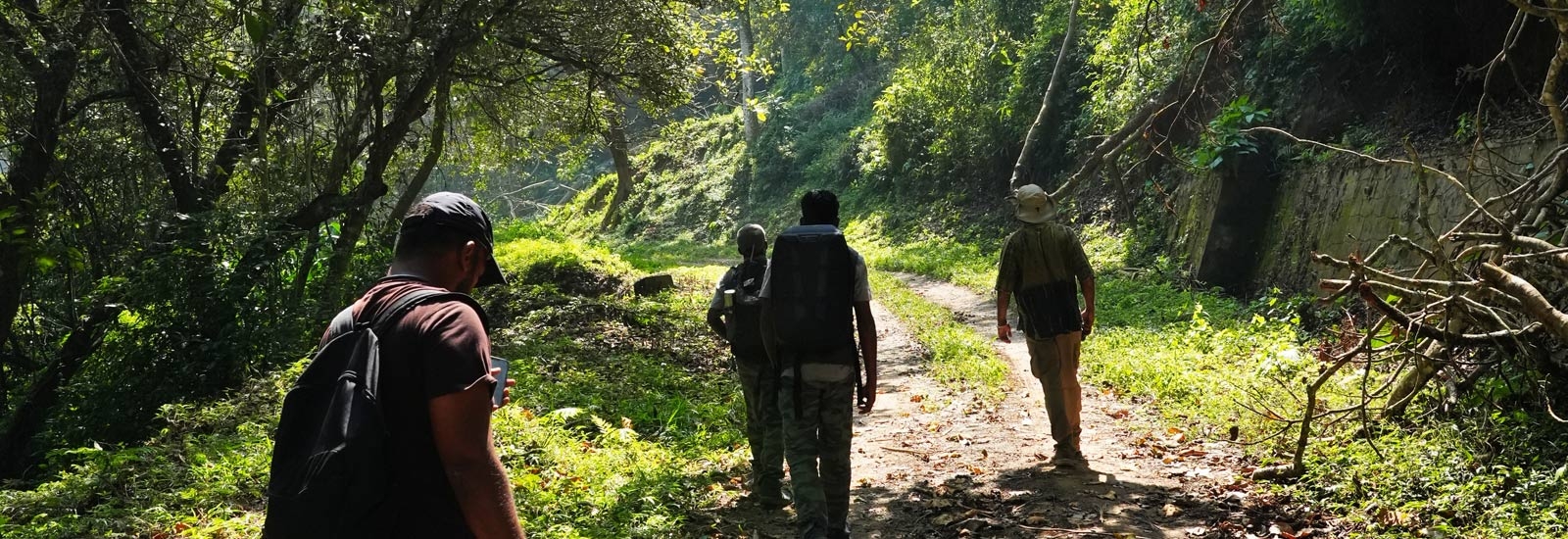
When it comes to trekking in Tamil Nadu, the state offers far more than scenic hill walks and leisurely nature trails. Home to the majestic Western Ghats, mist-covered peaks, dense forests, and rugged mountain terrains, Tamil Nadu boasts some of the toughest trekking trails in South India. These are not your typical weekend getaways—they demand absolute mental grit, physical preparation, and a true love for adventure.
From steep ascents and rocky paths to remote forest routes with stunning views, the best treks in Tamil Nadu reward trekkers with breathtaking landscapes, spiritual experiences, and an unmatched sense of achievement. Ideal for experienced trekkers, adrenaline seekers, and those eager to push their limits, these challenging trails showcase the raw beauty of adventure tourism in Tamil Nadu. Fortunately, through official initiatives, you can now safely book government-approved trekking trails in Tamil Nadu.
In this blog, we uncover six of Tamil Nadu's hardest treks, their highlights, difficulty levels, and why every daring explorer should experience them at least once.
Pack your boots; it’s time to conquer the wild side of South India!
1. The Nilgiris – Parsons Valley Trekking Shed to Mukurthi Hut
Want a real challenge? This is easily one of the toughest trekking trails in Tamil Nadu. This gruelling 20 Km high-altitude journey cuts straight through the protected, UNESCO-listed Shola forests and misty grasslands of Mukurthi National Park.
As one of the hardest treks in the region, the thin air and unpredictable weather will test your lungs and stamina. However, the payoff is spectacular. You will hike past colonial-era pine plantations, spot rare wildlife like the Nilgiri Tahr, and end at a colonial-era hut tucked in a wildlife-rich habitat. Permits are mandatory—it's a government-approved trekking trail in Tamil Nadu that promotes responsible trekking. Perfect for experienced trekkers. Just you, the mist, and pure wilderness.
- Difficulty Level: Tough
- Distance & Duration: 20 Km | 8 Hrs | Two Way (10+10)Km
- Best Season: February to May/September to November
- Key Highlights:
- Restricted core forest access with special permits
- Historic colonial-era Mukurthi Hut
- UNESCO-listed Shola-grassland ecosystem
- High-altitude solitude (no crowds)
- Chance to spot Bengal tigers, leopards, elephants, and Nilgiri Tahr
- Scenic Attractions:
- Mukurthi Peak
- Pandiar Hill
- Rolling mountain vistas
- Crystal-clear streams and cascades
- Dense Shola forests and grasslands
- Rich wildlife sightings, including endemic species like Nilgiri Tahr
- Physical Challenges:
- Extreme terrain changes – Dense humid forests to steep, uneven grasslands that strain calves, quads, and knees.
- High altitude & thin air – At 8,240 feet, breathlessness and mild altitude sickness are real risks.
- Harsh weather fluctuations – Near-freezing temps, severe winds, and dense mists can cause hypothermia.
- High endurance demands – 8 hours of raw wilderness pushes mental and muscular limits.
- Wildlife hazards – Elephants, tigers, and gaurs require constant alertness and group discipline.
- Why it Suits Daring Trekkers: It offers an off-grid journey through a restricted, protected biosphere with extreme terrain, high-altitude solitude, and real wildlife encounters—perfect for those who want raw adventure, not crowded tourist trails. Surely one of the toughest and most rewarding treks in Tamil Nadu for experienced trekkers.
2. The Nilgiris - Avalanche (Cauliflower shola) - Devarbetta
Here's a hidden gem among the toughest trekking trails in Tamil Nadu. The Avalanche to Devarbetta trek starts from the surreal Cauliflower Shola—named for its dense, dome-like canopies. From there, you climb through wind-swept grasslands and hidden ridgelines to Devarbetta Peak. It's a government approved trekking trail in Tamil Nadu with forest guides leading the way. Expect stunning views, rare wildlife, and pure solitude. This is easily one of the best treks for experienced trekkers who crave raw, unfiltered wilderness.
- Difficulty Level: Tough
- Distance & Duration: 13 Km | 6 Hrs | One Way
- Best Season: October to February
- Key Highlights:
- Restricted core forest access with special permits
- UNESCO-listed Shola-grassland ecosystem
- Unique "Cauliflower Shola" forest formation
- High-altitude solitude with no crowds
- Chance to spot Bengal tigers, leopards, elephants, and Nilgiri Tahr
- Located within the Nilgiri Biosphere Reserve
- Scenic Attractions:
- Cauliflower Shola
- Devarbetta Peak
- Avalanche Lake
- Rolling grasslands and mist-covered valleys
- Shola-grassland landscapes
- Wildlife and birdwatching opportunities
- Panoramic views of the Nilgiri Mountains
- Physical Challenges:
- Steep Ascents: Narrow, muddy trails and continuous climbs through forests and grasslands put considerable strain on the legs and knees.
- High Altitude: Rising to around 2,538 metres, the trek can cause breathlessness and fatigue due to thinner air.
- Unpredictable Weather: Sudden fog, strong winds, rain, and cold temperatures make the trail physically demanding.
- Slippery Terrain: Moss-covered rocks, wet foliage, and damp forest floors require constant balance and careful footing.
- Wildlife & Leeches: Trekkers may encounter leeches during damp seasons and must remain alert in habitats frequented by gaur, deer, and other wildlife.
- Why it Suits Daring Trekkers:
It offers a raw, extreme terrain through the mysterious Cauliflower Shola onto wind-swept grasslands, with unpredictable weather, real wildlife encounters, and a high-altitude summit reward of breathtaking 360-degree views—perfect for experienced trekkers seeking authentic adventure, not tourist crowds.
3. Coimbatore - Top slip - Pandaravarai
Deep inside the Anamalai Tiger Reserve lies one of the toughest trekking trails in Tamil Nadu — the Top slip to Pandaravarai Trek. This 10 Km guided adventure throws you into dense shola forests, open grasslands, and rocky boulders before summiting at Pandaravarai Peak. The reward? Stunning 360-degree views and a chance to spot Nilgiri Tahr or gaurs. It's a government-approved trekking trail in Tamil Nadu that demands real fitness. If you're looking for the best treks for experienced trekkers, this one delivers raw jungle and pure adrenaline.
- Difficulty Level: Tough
- Distance & Duration: 10 Km | 6 Hrs | One Way
- Best Season: November to February
- Key Highlights:
- Diverse ecosystems from dense evergreen Karian Shola to rolling grasslands
- Wildlife encounters such as Indian Gaurs, Nilgiri Tahrs, Spotted Deer, and rare birds
- Breathtaking 360-degree views from Pandaravarai Peak
- Mandatory permits with authorised forest guides
- Core forest zone adventure inside Anamalai Tiger Reserve
- Scenic Attractions:
- Evergreen Karian Shola
- Butterfly Park, Aliyar
- Chinnakallar Falls
- Evergreen Woodlands and Stream Crossings
- Attakatti Viewpoint
- Pandaravarai Peak
- Rolling High-Altitude Grasslands
- Physical Challenges:
- Steep Elevation Changes: Continuous ascents and descents put significant strain on the knees, calves, and ankles.
- Rugged Terrain: The trail passes through forests, rocky patches, and exposed grasslands, demanding balance and endurance.
- Humidity and Dehydration: The warm and humid conditions of the core forest zone can quickly lead to fatigue and fluid loss.
- Stream Crossings: Multiple water crossings require careful footing and become more challenging during wetter periods.
- Leeches and Insects: Leeches are common during damp seasons and can add discomfort and distraction to the trekking experience.
- Why it Suits Daring Trekkers:
It offers raw, undiluted terrain through dense rainforests and exposed grasslands, high-stakes wildlife encounters in a core forest corridor, and a breathtaking payoff at Pandaravarai viewpoint overlooking the mist-covered Anamalai ranges.
4. Dindigul - Kumbakarai - Vellagavi - Kodaikanal
Here's a trek that mixes raw adventure with culture. The Kumbakarai to Kodaikanal trail via Vellagavi is one of the toughest trekking trails in Tamil Nadu — a 14 km, two-day journey. You start at Kumbakarai Falls, climb steep forests to the 400-year-old vehicle-free village of Vellagavi for an overnight camp stay, then ascend to Kodaikanal via Dolphin's Nose. It's among the best treks for experienced trekkers who love camping under stars, spotting exotic birds, and walking through coffee plantations. Pure magic.
- Difficulty Level: Tough
- Distance & Duration: 14 Km | 12 Hrs | One Way
- Best Season: October to March
- Key Highlights:
- Historical Western Ghats route used by 18th-century Westerners
- Kumbakarai Falls – refreshing dip at the foothills
- Vellagavi Village – remote 300-year-old vehicle-free mountain hamlet with unique traditions
- Must remove footwear inside the village (over 25 ancient deities)
- Shola forests and wildlife with exotic bird spotting
- Dolphin's Nose and Vattakanal viewpoints
- Starlit camping under an unpolluted sky
- Scenic Attractions:
- Kumbakarai Falls
- Vellagavi Village
- Lush Shola Forests and Coffee Plantations
- Dolphin's Nose
- Echo Point
- Panoramic Mountain and Valley Views
- Vattakanal Landscapes
- Physical Challenges:
- Extreme Heat & Dehydration: The lower sections near Kumbakarai are hot and exposed, causing rapid energy loss and dehydration.
- Relentless Ascents: Continuous steep climbs from Vanathi Oodai to Vellagavi put significant strain on the legs and lungs.
- Heavy Backpack Load: Carrying camping gear, water, and essentials over long distances increases physical exhaustion.
- Rocky Terrain: Uneven paths, exposed roots, and rocky sections near Dolphin's Nose demand balance and sturdy footwear.
- Changing Microclimates: Trekkers move through hot foothills, misty forests, and chilly high-altitude conditions, testing adaptability and endurance.
- Why it Suits Daring Trekkers:
It offers unforgiving elevation gain with steep, relentless inclines, edge-of-the-world exposure on narrow paths with 1,000-meter valley drops, and a raw, self-supported journey through diverse microclimates plus the unique barefoot tradition of Vellagavi village.
5. Dindigul - Kodaikanal - Vellagavi- Kumbakarai
Here's a different kind of challenge. This route starts in cool Kodaikanal and heads downhill. It's still one of the toughest trekking trails in Tamil Nadu. You'll walk through coffee plantations, rocky terrain, and bird-filled forests to reach Vellagavi village, where locals walk barefoot as a mark of respect for their land. Then onward to Kumbakarai Falls for a well-earned dip. It's a government-approved trekking trail in Tamil Nadu that rewards responsible trekking with culture, views, and pure adventure.
- Difficulty Level: Tough
- Distance & Duration: 14 Km | 12 Hrs | One Way
- Best Season: October to March
- Key Highlights:
- Sacred 400-year-old Vellagavi village – no road access, over 25 deities
- Visitors and locals walk completely barefoot inside the village
- Historical trail predating modern ghat roads used by early Western settlers
- Kumbakarai Waterfalls – refreshing plunge with natural pools at the base
- Dramatic elevation change from 2,100m (Kodaikanal) down to 300m
- Rich biodiversity – exotic birds like drongos and bulbuls
- Complete isolation – off the beaten tourist path
- Overnight camp stay
- Scenic Attractions:
- Kumbakarai Falls
- Vanathi Oodai Stream
- Vellagavi Village
- Shola Forests and Grasslands
- Coffee Plantations
- Dolphin's Nose
- Echo Point
- Pine Forests of Kodaikanal
- Panoramic Sunrise and Sunset Views
- Physical Challenges:
- Relentless Steep Inclines: Continuous steep climbs and descents put heavy strain on the legs, knees, and stamina.
- Severe Heat and Humidity: The hot and humid lower sections can quickly drain energy and cause fatigue.
- Limited Water and Dehydration: Scarce water sources and the need to carry extra water increase the risk of dehydration and exhaustion.
- Uneven and Rocky Terrain: Loose rocks, exposed roots, and rugged paths demand constant focus and careful footing.
- Slippery Trails, Dense Mist, & Leaches: Muddy trails and thick fog can reduce visibility and make navigation more challenging. Leeches become a real nuisance in dense forest stretches.
- Why it Suits Daring Trekkers:
It combines steep elevation gains, dramatic climate shifts, remote wilderness, and exposed mountain trails that test both physical endurance and mental resilience. The journey through sacred Vellagavi, untouched forests, and breathtaking viewpoints offers a raw, immersive, and deeply rewarding trekking experience in the Western Ghats.
6.Krishnagiri - Guthirayan Peak
The Guthirayan Peak trek in Krishnagiri district is one of the toughest trekking trails in Tamil Nadu. This 11 km round-trip takes about 6 hours through dense evergreen forests, bamboo brakes, and open grasslands. The payoff? Standing on the highest point of the Melagiri Hills with panoramic views. The dense tree cover keeps things cool, but don't underestimate the climb. It's easily among the best treks for experienced trekkers who love birds, butterflies, and raw wilderness.
- Difficulty Level: Tough
- Distance & Duration: 11 Km | 6 Hrs | Two Way(5.5+5.5)Km
- Best Season: November to May
- Key Highlights:
- Rich biodiversity – dense deciduous forests, bamboo brakes, and rocky hilltops
- Abundant butterflies and rare bird species
- Wildlife corridor – Indian gaur, wild boars, and spotted deer
- 360-degree summit views of deep valleys, rolling hills, and distant Mettur Dam
- Highest point in the Melagiri Hills (1,402 meters)
- Scenic Attractions:
- Dense Mixed Deciduous Forests
- Bamboo Brakes and Open Hill Slopes
- Humid Southern Moist Forest Patches
- Panoramic Summit Views
- Deep Valleys and Rolling Hills
- Rich Birdlife and Butterfly Diversity
- Seasonal Mist and Floral Landscapes
- Distant Views of Mettur Dam (on clear days)
- Physical Challenges:
- Steep incline & endurance – The last 800 meters to the summit feature a strenuous climb through dense vegetation, testing cardiovascular fitness.
- Trekking over loose boulders – A bouldery patch in the first clearing requires good balance and puts high load on knees and ankles.
- High-speed summit winds – The open rocky summit is battered by strong gusts, requiring careful footing to maintain balance.
- Navigation & remote logistics – A grueling 17–18 km forest road commute just to reach the base point adds to the physical demand.
- Why it Suits Daring Trekkers:
It offers a raw, untouched wilderness experience with a true expedition feel—requiring a long forest road commute just to reach the base, followed by dense diverse ecosystems, high-adrenaline wildlife corridors, and a rewarding 360-degree summit view from the highest point in the Melagiri Hills.
Essential Tips for Trekking in Tamil Nadu
Before you hit those toughest trekking trails in Tamil Nadu, a little prep goes a long way. These aren't your average weekend walk in the park. They demand respect, training, and the right gear.
Here is your ultimate playbook to conquer the wild safely while practicing responsible trekking.
Physical Preparation:
Get your body trail-ready
- Cardio is king – Jog 5 km in 30–35 minutes without gasping. Or cycle/swim 3–4 times a week.
- Leg day matters – Squats, lunges (3 sets of 15–20), and calf raises build thighs, glutes, and knees.
- Core strength – Planks, leg raises, and push-ups keep you balanced when carrying a backpack.
- Stair climbing with weight – Pack 8–10 kg in your trekking shoes and climb 15–20 floors, 3 sets. Simulates real mountain stress.
- Stay flexible – Stretch hips, ankles, and knees daily. Your knees will thank you on steep descents.
Trekking Gear Checklist
Pack smart, trek safe
- High-ankle trekking shoes with aggressive grip – no sneakers, please
- Leech socks + salt – non-negotiable for Western Ghats
- Raincoat or poncho – weather changes fast
- Hydration pack or 2–3 litres of water – plus a water filter or purification tablets
- High-energy snacks – nuts, protein bars, dry fruits, dates
- First aid kit – include a snake bite bandage
- Power bank + offline maps
- Headlamp with extra batteries – you don't want to be caught in the dark
- Emergency whistle – loud and small
- Lightweight tent & sleeping bag – for multi-day treks
Safety Precautions
Stay alive, come back happy
- Get permits – Most government-approved trekking trails in Tamil Nadu require forest department permits. Don't skip this
- Hire local guides – They track elephants, gaurs, and snakes. They know when to reroute.
- Start before sunrise – Beat the heat, humidity, and afternoon mist. Reach your destination before dusk.
- Ditch denim – Cotton and jeans trap sweat and get dangerously heavy. Wear moisture-wicking, quick-dry layers.
- Wear sturdy footwear – Low-ankle sports shoes = twisted ankles waiting to happen.
- Drink small sips constantly – Don't wait until you're thirsty. Carry 2–3 litres minimum.
- Listen to your body – Feeling dizzy or exhausted? Rest in shade. Turn back if the weather worsens.
- Jungle Alertness – Don't stick your hands into rock crevices or under logs. Scorpions and snakes live there.
Responsible Trekking & Sustainable Tourism
- Stick to government-approved trekking trails in Tamil Nadu.
- Inform the local forest office before starting.
- Hire local guides – supports the community and ensures safety.
- Carry back all plastic and waste – leave no trace.
- Avoid loud music – wildlife gets disturbed.
- Trek in groups of at least 3–4 people.
- Don't trek in the monsoon on dangerous trails.
- Don't feed or approach wild animals.
Conclusion
Make no mistake: these six trails are the definition of toughest trekking trails in Tamil Nadu. They'll test your lungs, your legs, and your patience. But the reward isn't just the summit view. It's pushing your limits, embracing the wild, and walking away with unforgettable memories — and maybe a few leech bites.
If you're after the best treks for experienced trekkers, this is your list.
Conquer them responsibly. Leave nothing behind but footprints. Take nothing but photos. That's the real badge of honor!
Now go earn it!
Frequently Asked Questions
Yes. Most tough trails are inside protected forests. You must obtain government-approved permits through the Tamil Nadu Forest Department.
October to February and November to May, depending on the region. Avoid the monsoon due to slippery trails and leeches.
Yes. The hardest treks in Tamil Nadu demand good physical fitness, stamina, and some trekking experience. Steep climbs, long walking hours, and uneven terrain can be challenging for beginners and are best suited for experienced trekkers.
Yes, trekking in Tamil Nadu is safe when you follow guidelines, trek with authorised guides, obtain necessary permits, and avoid risky weather conditions. Proper preparation and responsible trekking practices significantly reduce potential challenges and ensure a safer experience.



Share This News