No.4, Annai Avenue, Vasanth Nagar EXTN,
Srirangam, Trichy, Tamil Nadu ,620006.
CIN: U31100TN2010PTC078389
DUNS Number: 859496557

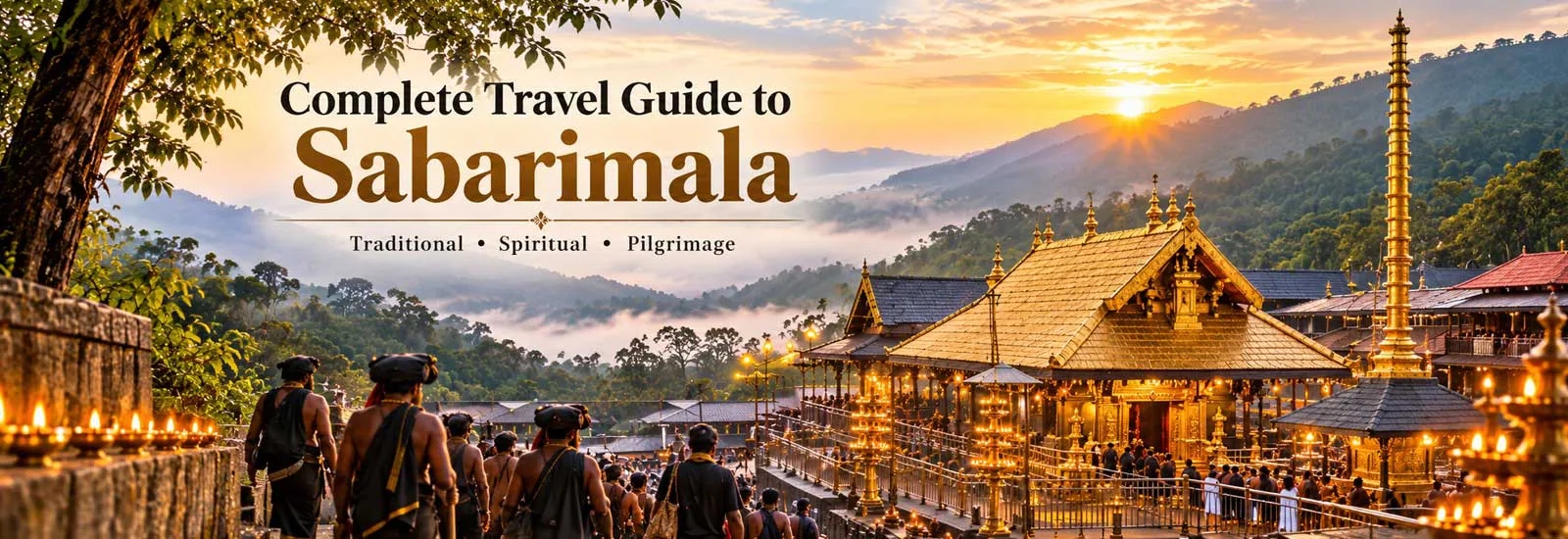
Situated in the thick forests and hilly areas of the Western Ghats in Kerala, the Sabarimala Temple is one of India's most respected pilgrimage sites. It is located in the Pathanamthitta district and is devoted to Lord Ayyappa, who is known here as Sree Dharma Sastha. A trip to Sabarimala is seen not merely as a visit to a temple but as a pilgrimage involving faith, discipline, endurance and self-reflection. The temple is set among forested hills and lies within the Periyar Tiger Reserve. Devotees from all over India and from abroad carry out the pilgrimage, especially during the Mandala-Makaravilakku season. If you are planning a Sabarimala Pilgrimage tour for the first time with family and friends, gaining an understanding of the traditions, the travel routes, the registration procedure, the necessary preparations and the key places en route will help to make your Sabarimala experience easier and more significant.
The Sabarimala temple is situated on a hilltop at a height of about 3,000 feet above sea level and is bordered by mountains and thick forests. The main deity is Lord Ayyappa, who is also called Manikandan and Dharma Sastha. On the basis of tradition, Lord Ayyappa is venerated at Sabarimala as a Naishtika Brahmachari, that is, an eternal celibate. Sabarimala pilgrimage is closely linked with the sacred Pamba River, the forest trails, the holy 18 steps known as Pathinettampadi and a number of temples and pilgrimage sites connected with Lord Ayyappa.
A key aspect of the Sabarimala pilgrimage is the vratham, which devotees have traditionally kept for 41 days before travelling to Sabarimala. While undertaking this vratham, devotees lead a disciplined life comprising prayer, eating vegetarian food, observing celibacy and carrying out other customary practices. It is traditional for devotees to wear black or blue clothes and to take with them an Irumudi Kettu, a sacred set of offerings. The temple is not open all the time during the year as is the case with a number of other temples; its opening dates and the main periods of pilgrimage are according to the Malayalam calendar. The principal Sabarimala pilgrimage season consists of Mandalapooja and Makaravilakku, in addition to which the temple is also open for certain monthly poojas and festivals.

One of the most important elements of the Sabarimala pilgrimage is the Pathinettampadi, also known as the 18 sacred steps. It is traditional that only devotees who are carrying the Irumudi Kettu should be allowed to climb these holy steps. The steps lead to the sanctum sanctorum and stand as a key spiritual phase of the pilgrimage. Prior to arriving at the steps, the pilgrims go through various significant sites including Neelimala, Appachimedu, Sabari Peetam and Saramkuthi. The traditional trek from Pamba to Sannidhanam is approximately 5 km in length.
The best time to visit the Kerala Sabarimala temple is the Mandala-Makaravilakku pilgrimage season, which usually occurs between November and January. The Mandala period normally lasts for 41 days and ends with the Mandala Pooja; Makaravilakku happens about the time of Makar Sankranti in January and is one of the most important events on the Sabarimala pilgrimage calendar. The Thiruvabharanam procession, in which the sacred ornaments of Lord Ayyappa are carried from Pandalam, is also a significant element of the festivities. The peak time can become very crowded. Pilgrims going during the Mandala or Makaravilakku period should therefore make their arrangements well in advance and consult the official temple calendar and travel warnings before setting off on their journey. Those who wish to have a more peaceful pilgrimage experience might choose one of the other temple-opening periods mentioned in the official calendar.
One of the most important arrangements to make before going on a trip is to obtain Sabarimala registration and to secure a darshan. The Travancore Devaswom Board has currently made it compulsory for pilgrims visiting Sabarimala to book their places online via Virtual-Q. The purpose of the system is to manage the large number of devotees who turn up at the shrine and to assign each pilgrim a specific slot. The official Sabarimala Pilgrim Management System can be accessed through Sabarimala Online. This system was developed as a coordinated platform involving the Kerala Police, the Travancore Devaswom Board and KSRTC. While registering, pilgrims may be required to provide details such as - Name and age, Contact details, Photograph, Photo identity card details, preferred date and available darshan time slot. On successful registration the pilgrim is given a confirmation and an e-ticket and should take with them the e-ticket as well as the identical photo identification document that was used at the time of registration; the system also provides the option of booking in groups.
Important note: The Sabarimala registration process, availability and the conditions for entry may vary from one pilgrimage season to another. It is necessary to consult the most recent instructions on the official Sabarimala/Travancore Devaswom Board website before you travel.
As the Ayyappa temple is situated on a hill covered with forests, it is impossible for vehicles to go directly to the temple and so the pilgrims usually go to Pamba and then continue their journey on foot.
The nearest major airports to Sabarimala include:
• Cochin International Airport – approximately 154 km
• Thiruvananthapuram International Airport – approximately 170 km
Travellers can take a taxi or a bus from the airport to the areas of the Sabarimala pilgrimage base.
Chengannur is one of the railway stations nearest to Sabarimala and lies at a distance of about 85 km from it; pilgrims may take buses or taxis from there to Pamba and other places of pilgrimage.
For people coming from Kerala, Tamil Nadu, Karnataka and other regions of India, travelling by road is a convenient means of getting to Sabarimala; depending on the direction they are travelling, the pilgrims may use the main National Highway routes which link to the principal pilgrimage towns and access points.
From Tamil Nadu: NH 44 → Madurai → Theni → Kumily → Vandiperiyar → Pamba
From Kerala: NH 183 / NH 183A → Kottayam → Ponkunnam → Erumeli → Pamba
From Karnataka: NH 44 → Salem → Dindigul → Madurai → Theni → Kumily → Vandiperiyar → Pamba
Pamba is one of the key sites on the Sabarimala pilgrimage route, the river being considered sacred and closely linked with the legends about Lord Ayyappa. It is traditional for pilgrims to take a holy dip in the Pamba River before starting their ascent. After this they go through the forested path to the temple. The climb brings them past Neelimala and Appachimedu before they reach Sabari Peetam and Saramkuthi. Pilgrims who are visiting for the first time, referred to as Kanni Ayyappans, have certain customs connected with Saramkuthi. The last part of the journey takes pilgrims to Pathinettampadi, the sacred site. It is important for pilgrims to bear in mind that this is a physically tough journey, the ground consisting of slopes, steps and busy sections, and it is essential to have suitable footwear for the parts of the journey that are permitted, to stay well hydrated and to be physically prepared.
Devotees usually observe a time devoted to both spiritual and physical preparation before going to Sabarimala, and it is very important to follow the traditional rules for the Sabarimala pilgrimage and to prepare accordingly.
A 41-day Vratham involves following a disciplined way of life, including prayer, exercising self-control, eating simple food, and remaining celibate.
A visit to Sabarimala may involve a number of places which are spiritually significant and linked with Lord Ayyappa.
Erumeli serves as a major starting point for the traditional pilgrimage to Sabarimala, and the Erumeli Sree Dharma Sastha Temple, which is devoted to Lord Ayyappa, is closely linked with the traditional pilgrimage route.
One of the special features of the Sabarimala pilgrimage is its connection with Vavar. It is traditional that Vavar was a close companion of Lord Ayyappa and that those pilgrims who follow the traditional Erumeli route pay their respects at the Vavar Mosque before going on with their journey.
Pandalam is closely linked to the legend and customs of Lord Ayyappa; the Valiya Koyikkal Temple is situated in the Pandalam palace complex and is connected with the royal family The sacred procession of Thiruvabharanam, which carries the ornaments of Lord Ayyappa, starts from this point before moving on to Sabarimala during the Makaravilakku season.
Pamba has an important geographical and spiritual significance; the river is traditionally regarded as a holy one and is closely associated with the legend of Lord Ayyappa, pilgrims customarily taking a holy bath at this place before starting their ascent to Sannidhanam.
The Kulathupuzha Temple, which is in the Kollam district, is also a significant shrine dedicated to Ayyappa and here Lord Ayyappa is venerated as Bala Sastha. The temple can be incorporated into a broader pilgrimage route for devotees who are travelling through the area.
The real reason behind “Why Women Were Traditionally Not Allowed to Sabarimala?” is
The trip to Sabarimala involves far more than simply getting to a temple on a hill. The 41-day vratham observed, the customs of Irumudi, the holy Pamba River, the forest pilgrimage path and the ascent to Pathinettampadi are all part of a well-established spiritual tradition. If you go via Erumeli and take in the traditional pilgrimage practices, make the final climb towards Pamba, or visit the temples linked with Ayyappa in the areas of Pathanamthitta and Pandalam, you will have a pilgrimage experience that is unlike any other. To ensure a smooth journey, you should plan your route in advance, complete the Sabarimala registration and darshan procedures beforehand, familiarise yourself with the rules and preparations for the Sabarimala pilgrimage and check the official announcements before you leave. Most importantly, you must approach the site with patience, respect and a sense of appreciation for its religious, cultural and natural heritage.
No FAQ available for this Blog.


Share This News